
Are There Quiet Hours for Construction Work?
Are There Quiet Hours for Construction Work?
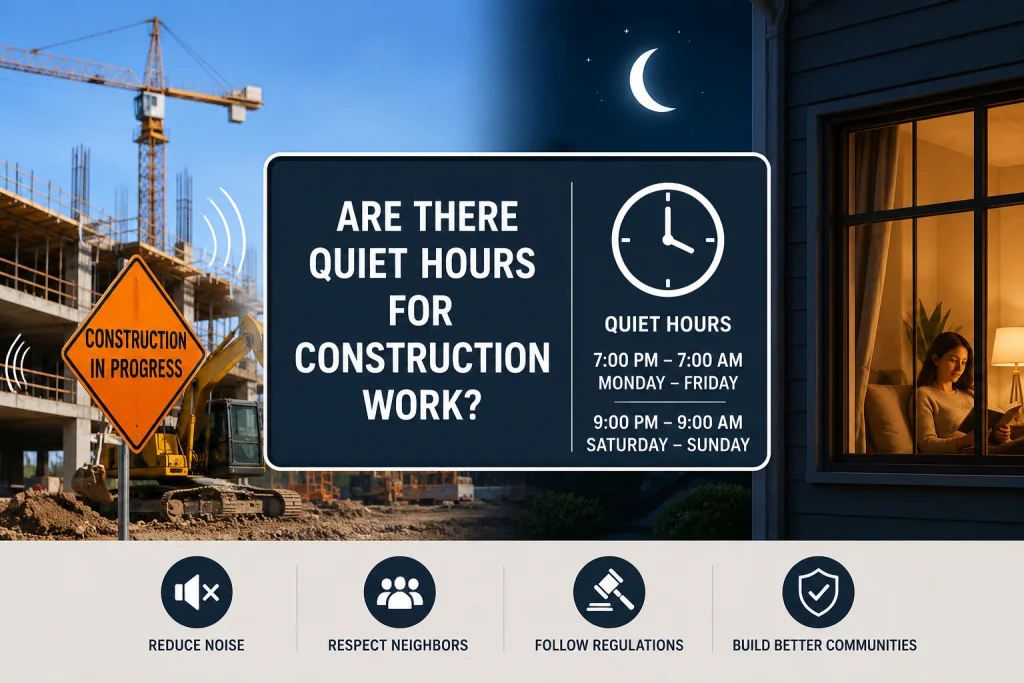
Construction is inherently a loud business. From the rumble of excavators to the sharp crack of nail guns, noise is an unavoidable byproduct of building our world. However, as urban density increases and communities become more vocal about quality of life, construction professionals are facing stricter scrutiny regarding site noise.
This brings up a critical question for project managers, contractors, and developers: Are there quiet hours for construction work, and what exactly are "protected silence periods"?
Failing to understand and adhere to these regulations can result in hefty fines, stop-work orders, and damaged community relations. Here is everything your construction team needs to know about navigating noise ordinances and protected silence periods.
What Are "Protected Silence Periods"?
While "quiet hours" is a common colloquial term, protected silence periods is the formal regulatory concept used by municipalities and local councils.
A protected silence period is a legally mandated timeframe during which noise levels must be kept below a specific decibel threshold, or noisy construction activities must cease entirely. These periods are designed to protect the health, sleep, and general well-being of the surrounding community.
Unlike standard noise limits (which might just require you to keep the volume down), a protected silence period often means a total ban on specific high-decibel activities, regardless of how "quiet" you try to be.
When Do Quiet Hours Typically Apply?
Disclaimer: Noise ordinances vary wildly by city, county, and state. Always consult your local municipal code for exact legal requirements.
However, across most major metropolitan areas, protected silence periods generally fall into the following windows:
- Nighttime Hours: Typically from 6:00 PM or 7:00 PM to 7:00 AM the following morning.
- Sundays and Public Holidays: Many municipalities enforce a full-day protected silence period on Sundays and federal holidays, or restrict work to a very narrow window (e.g., 9:00 AM to 5:00 PM).
- Saturdays: Often treated as a hybrid, with later start times (e.g., 8:00 AM or 9:00 AM) and earlier end times (e.g., 5:00 PM or 6:00 PM).
The True Cost of Ignoring Quiet Hours
For construction professionals, violating protected silence periods is about much more than just an annoyed neighbor calling the police. The business impacts can be severe:
- Stop-Work Orders: Local code enforcement can halt your entire site operation. A two-day shutdown for a noise violation will severely impact your critical path and project delivery date.
- Financial Penalties: Fines for noise violations can range from hundreds to tens of thousands of dollars, especially for repeat offenses.
- Permit Jeopardy: A history of noise violations can make it incredibly difficult to secure future permits, variances, or approvals for weekend work on subsequent projects.
- Reputational Damage: In the era of social media, a single viral video of your crew working at 10:00 PM can lead to public backlash, damaging your firm’s reputation with clients and the community.
4 Strategies for Managing Site Noise and Scheduling
To keep your project on schedule and out of legal trouble, proactive noise management must be integrated into your site logistics plan.
1. Map Out the Protected Silence Periods Early
Before breaking ground, have your project manager review the local noise ordinance. Map these protected silence periods directly onto your master construction schedule. Identify which critical path activities require heavy noise and ensure they are scheduled strictly within permitted daytime hours.
2. Sequence the "Loudest" Work Strategically
Not all construction noise is created equal. Demolition, pile driving, and concrete coring are exceptionally loud. Schedule these high-impact activities for the middle of the permitted workday (e.g., 9:00 AM to 3:00 PM). Save the quieter tasks—like interior framing, drywall, or painting—for the early morning or late afternoon edges of your permitted hours.
3. Invest in Noise Mitigation Technology
If you are working near the boundary of a protected silence period, or in a highly sensitive area (like near a hospital or residential zone), invest in noise mitigation:
- Acoustic Blankets and Barriers: Deploy sound-dampening blankets around scaffolding and site perimeters.
- Electric Equipment: Swap out gas-powered generators and compressors for electric or battery-operated alternatives, which operate at a fraction of the decibel level.
- Modern Mufflers: Ensure all heavy equipment is fitted with properly maintained, secondary noise-reduction mufflers.
4. Implement a Proactive Community Outreach Plan
Sometimes, the best way to handle noise is communication. Before starting a particularly loud phase of construction, distribute flyers to the surrounding neighborhood. Let them know what to expect, how long the noisy phase will last, and provide a direct phone number for the site superintendent to call if they have concerns. Goodwill goes a long way in preventing formal noise complaints.
In the modern construction industry, respecting protected silence periods is not just a legal obligation; it is a hallmark of a professional, well-managed project. By understanding local quiet hours, strategically sequencing your work, and investing in noise mitigation, you can build your project efficiently while maintaining the peace of the surrounding community.
Found this article valuable?
Share it with fellow builders, architects, or download the QR code.
Written by Shanmugam2026
Verified CreatorARQONZ Editorial Team brings you expert insights, construction guides, and architectural design trends from across the building industry.
Related Articles in Construction