
AI⏱️ 5 min read👁️ 75 views
What's the Difference Between Interior Design and Interior Decorating
What's the Difference Between Interior Design and Interior Decorating
s
shanmugamAuthor Home →
Published on October 9, 2026
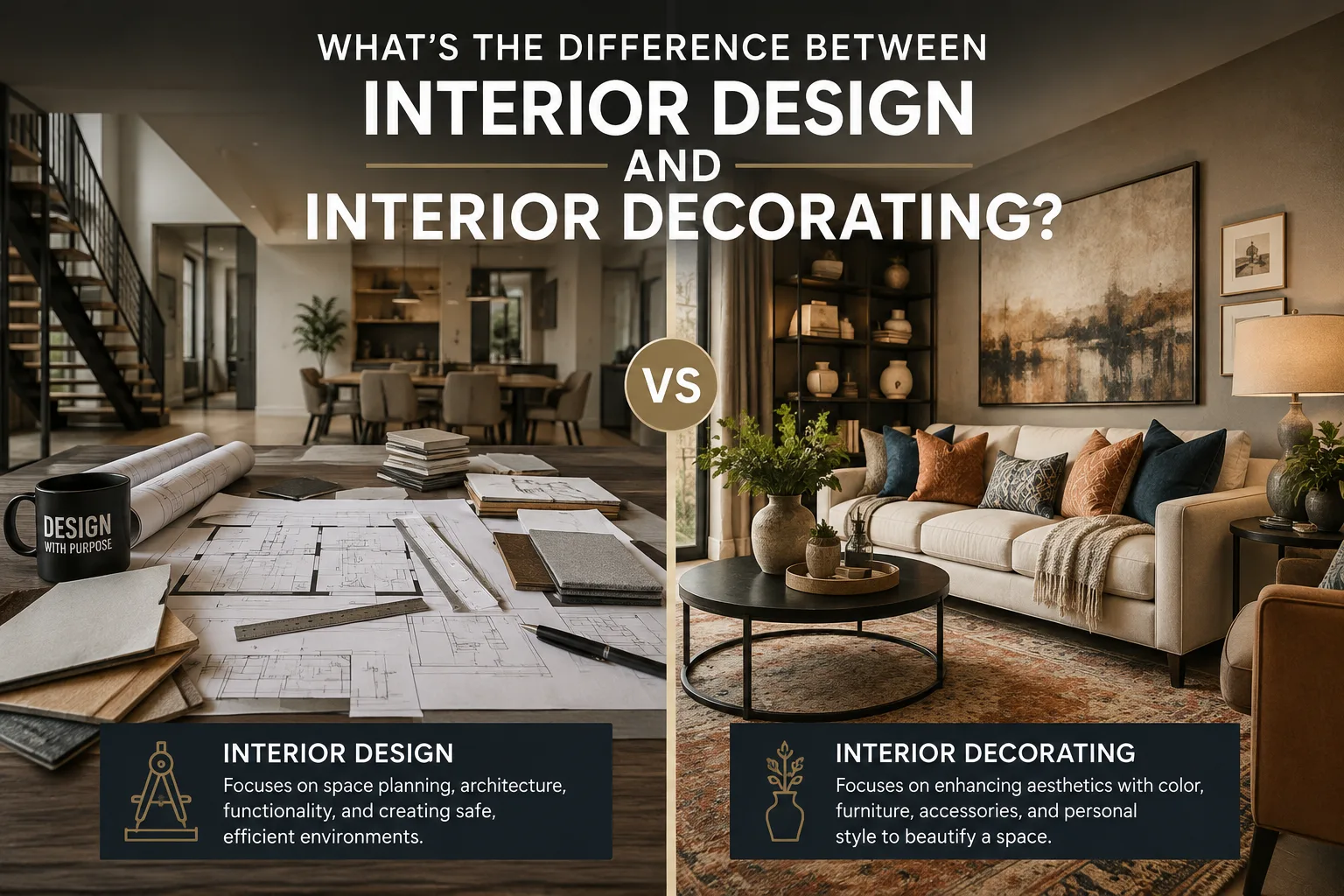
In the construction and development world, few terms are conflated as often as "interior design" and "interior decorating." For the average homeowner or commercial tenant, the terms are practically interchangeable. But for general contractors, project managers, and builders, failing to distinguish between the two can lead to scope creep, scheduling delays, and costly change orders.
To ensure seamless project delivery and manage client expectations effectively, construction professionals must understand the distinct boundaries of these disciplines. Here is a comprehensive breakdown of the differences between interior design and interior decorating, and why clarifying these service types is critical to your next build.
Interior Design: The Science of Space and Structure
Interior design is a highly technical, multi-disciplinary profession. Interior designers are focused on the functionality, safety, and structural integration of an interior space. They work closely with architects, engineers, and contractors from the earliest phases of pre-construction.
Key Focus Areas of Interior Design:
- Space Planning & Architecture: Altering floor plans, moving non-load-bearing walls, and optimizing spatial flow.
- Building Codes & Compliance: Ensuring designs meet local building codes, fire safety regulations, and ADA accessibility standards.
- MEP Coordination: Working with mechanical, electrical, and plumbing engineers to integrate lighting, HVAC, and plumbing layouts seamlessly into the aesthetic vision.
- Technical Documentation: Producing detailed CAD or BIM (Building Information Modeling) drawings, reflected ceiling plans, and construction documents used for permitting and bidding.
When to Bring Them Onboard: Interior designers should be involved during the pre-construction and schematic design phases. Their input dictates the physical layout of the build.
Interior Decorating: The Art of Aesthetics and Finishes
If interior design is the structural and functional skeleton of a space, interior decorating is the skin and clothing. Interior decorators do not alter the physical structure of a building; instead, they focus on the visual aesthetics and the selection of surface-level finishes.
Key Focus Areas of Interior Decorating:
- FF&E (Furniture, Fixtures, and Equipment): Sourcing and procuring furniture, rugs, window treatments, and art.
- Color & Material Palettes: Selecting paint colors, wallpapers, and decorative textiles.
- Styling & Staging: Arranging accessories, lighting fixtures (non-hardwired), and decor to create a specific mood or lifestyle appeal.
- Surface Finishes: Choosing decorative tiles, countertops, and flooring (provided the subfloor and structural prep are already handled by the GC).
When to Bring Them Onboard: Decorators typically enter the project during the late construction or post-construction phases, once the drywall is up, the floors are laid, and the space is ready for its final visual transformation.
Clarifying Service Types in Your Contracts
For construction firms, the most critical takeaway is clarifying service types before a single shovel hits the dirt. Misaligned expectations regarding who is responsible for what is a primary driver of project friction.
Here is how you should clarify service types with your clients and subcontractors:
1. Pre-Construction vs. Post-Construction Services
- Design Services (Pre-Construction): If a client hires an interior designer, the GC needs to expect RFIs (Requests for Information), structural change orders, and MEP coordination. The designer’s service type is technical and structural.
- Decorating Services (Post-Construction): If a client hires a decorator, the GC should not expect structural plan revisions. The decorator’s service type is procurement and aesthetic.
2. Permitting and Liability
Clarify who holds the liability for code compliance. Interior designers (and in many jurisdictions, they must be licensed or registered) take legal responsibility for life-safety and code-compliant designs. Decorators do not pull building permits. If a client asks a decorator to "design" a new bathroom layout, the GC must step in to ensure a licensed professional or architect stamps the drawings for the city.
3. The "Design-Build" Hybrid
Many modern construction firms are adopting a Design-Build model. If your firm offers in-house design services, clarify to the client which phase of the project they are currently in. Are they paying for design services (drafting, engineering, permitting) or decorating services (procurement, styling, vendor management)? Separating these line items in your contract prevents billing disputes.
Why This Distinction Matters for Construction Professionals
Understanding the difference between design and decorating directly impacts your bottom line and project efficiency in three major ways:
- Preventing Scope Creep: If a client hires a decorator but expects them to move a plumbing stack, the contractor will be caught in the middle. Clarifying service types ensures the client hires the right professional for the right task.
- Optimizing the Construction Schedule: Bringing a decorator in during the framing phase is a waste of their time and the client's money. Conversely, waiting until the drywall is hung to bring in an interior designer will result in massive, expensive change orders.
- Streamlining Subcontractor Coordination: Designers provide the technical drawings your electricians and plumbers need to rough-in their work. Decorators provide the finish selections (like faucet styles or light fixture dimensions) your finish carpenters and electricians need for the final trim-out. Knowing which professional is providing which information keeps your subs moving efficiently.
The Bottom Line
While both interior designers and interior decorators are vital to delivering a beautiful, functional final product, their roles in the construction lifecycle are distinctly different. Interior designers shape the physical space and ensure it is safe and functional; interior decorators curate the visual experience and bring the space to life.
As a construction professional, your job isn't to do their work—it's to understand their scope. By clearly defining these service types in your project planning, you protect your schedule, manage your client’s expectations, and ensure a smoother path from groundbreaking to grand opening.
Found this article valuable?
Share it with fellow builders, architects, or download the QR code.
s
View Creator Home→Written by shanmugam
Verified CreatorIndependent Villa - Planning & Design
Related Articles in AI


What Should I Never Tell a Contractor?
9/22/2026Read →