Can a Contractor Charge Extra for Hidden Problems Like Mold or Rot?
Can a Contractor Charge Extra for Hidden Problems Like Mold or Rot?
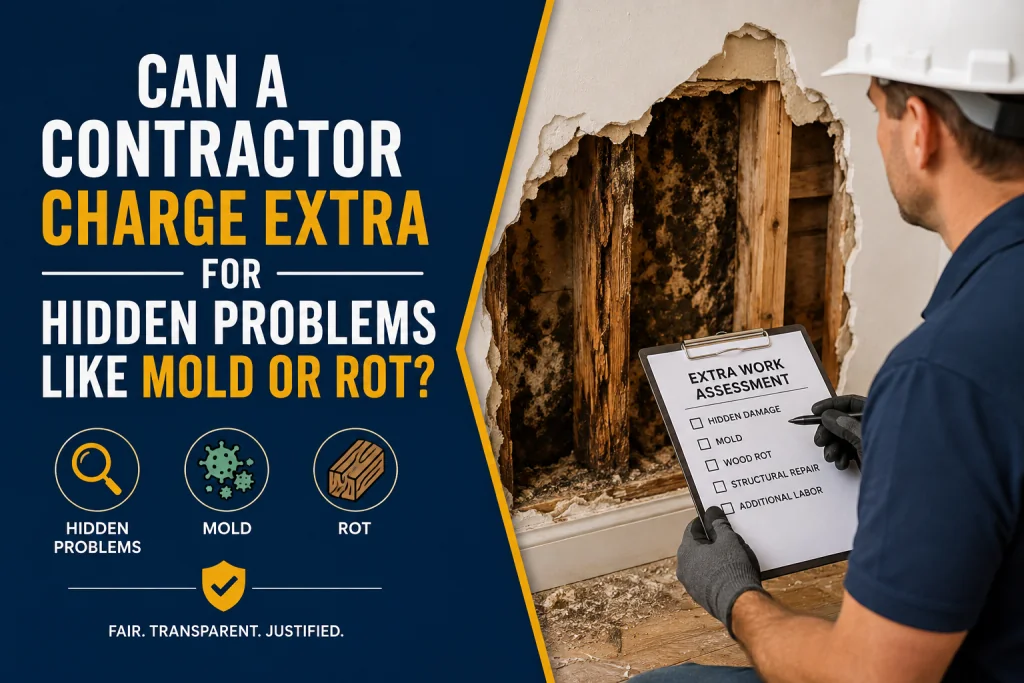
You’ve signed the contract, the permits are pulled, and the demolition phase is underway. Everything is going according to plan—until the contractor opens up a wall and discovers extensive wood rot or a hidden colony of black mold.
Suddenly, the project timeline and budget are in jeopardy.
For homeowners, this discovery can feel like a massive, unexpected financial blow. For contractors, it presents a complex challenge of how to address a safety hazard while managing client expectations. This leads to one of the most common and contentious questions in the construction industry: Can a contractor legally and ethically charge extra for hidden problems like mold or rot?
The short answer is yes—but with strict conditions. Understanding how unforeseen work charges are handled is crucial for maintaining trust, avoiding legal disputes, and ensuring the structural integrity of the project.
Here is a professional breakdown of how unforeseen conditions, contracts, and change orders work in the construction industry.
What Are "Unforeseen Conditions"?
In construction, an "unforeseen condition" (often referred to as a concealed condition) is a physical condition that differs materially from what was indicated in the contract documents or what could reasonably have been anticipated at the time of bidding.
Common examples include:
- Structural rot hidden behind drywall or siding.
- Toxic mold growing inside HVAC ducts or behind shower tiles.
- Outdated or non-compliant electrical wiring hidden inside walls.
- Plumbing leaks or corroded pipes concealed under floorboards.
- Unstable soil or hidden bedrock during excavation.
Because these issues are literally hidden behind finished surfaces, it is virtually impossible for a contractor to accurately price them in the initial estimate without destructive testing.
The Role of the Contract: The "Concealed Conditions" Clause
The legality of charging extra for hidden problems starts and ends with the construction contract. A well-drafted professional contract will include a Concealed Conditions Clause (or Differing Site Conditions clause).
This clause explicitly states that if the contractor encounters hidden conditions that could not be reasonably foreseen, they have the right to halt work in that specific area and request an adjustment to the contract price and timeline.
If a contractor provided a "fixed-price" bid but included a concealed conditions clause, they are legally protected when they encounter hidden mold or rot. However, if the contract is vague or lacks this clause, the contractor may be forced to absorb the costs, which can lead to corner-cutting or financial ruin.
The Golden Rule: The Change Order Process
While a contractor can charge extra for hidden problems, they cannot simply add it to the final invoice and surprise the homeowner at the end of the project.
To charge for unforeseen work professionally and legally, the contractor must follow the Change Order process:
- Stop Work: The contractor must pause work in the affected area to prevent further damage or health hazards.
- Document the Issue: Take clear, time-stamped photos and videos of the mold, rot, or structural issue. If necessary, bring in a third-party specialist (like an industrial hygienist or structural engineer) to assess the scope.
- Communicate Immediately: Inform the homeowner immediately. Explain what was found, why it must be addressed before the original scope of work can continue, and the health/safety risks of ignoring it.
- Draft a Change Order: Create a formal Change Order document detailing the extra work required, the additional materials needed, the added cost, and the extension to the project timeline.
- Get Written Approval: The homeowner must sign the Change Order before the extra work begins.
Note for Contractors: Never proceed with unforeseen work without a signed Change Order. "Verbal approvals" are notoriously difficult to enforce and are the leading cause of payment disputes in construction.
How Homeowners Can Protect Themselves
While contractors must be transparent, homeowners also have a responsibility to protect their investments. To avoid the shock of unforeseen work charges, property owners should:
- Invest in Pre-Construction Inspections: For older homes, consider hiring a specialist to do moisture mapping, thermal imaging, or asbestos/lead testing before finalizing the renovation budget.
- Build in a Contingency Fund: Industry standard dictates that homeowners should set aside 10% to 20% of the total project budget in a contingency fund specifically for unforeseen conditions.
- Read the Contract: Understand exactly what is and isn't covered. Ask the contractor to explain the concealed conditions clause before signing.
Best Practices for Contractors Handling Hidden Issues
For construction professionals, discovering hidden mold or rot is an opportunity to demonstrate integrity and expertise. How you handle the situation will define your reputation.
- Be Transparent, Not Alarmist: Explain the issue factually. Provide the science behind why the rot/mold is dangerous and why it must be remediated before framing or drywall can continue.
- Offer Options: If possible, give the homeowner options. For example, offer a full professional mold remediation service, or provide the specifications so they can hire a specialized third-party remediation company (with the understanding that your project timeline will pause until it's cleared).
- Price Fairly: The extra work should be priced at the same fair market rate established in the original contract. Do not use the homeowner's panic to price-gouge the change order.
Can a contractor charge extra for hidden problems like mold or rot? Absolutely. It is not only legal, but it is often a necessary step to ensure the safety and longevity of the build.
However, these unforeseen work charges are only valid when managed through clear contracts, transparent communication, and formal, signed Change Orders. By understanding how concealed conditions work, both contractors and homeowners can navigate the inevitable surprises of construction with professionalism, trust, and a shared goal of a successful project.
Found this article valuable?
Share it with fellow builders, architects, or download the QR code.
Written by Shanmugam2026
Verified CreatorARQONZ Editorial Team brings you expert insights, construction guides, and architectural design trends from across the building industry.
Related Articles in Construction

What Should I Never Say to My Contractor?