Can I Get Financing for Sustainable Home Improvements?
Can I Get Financing for Sustainable Home Improvements?
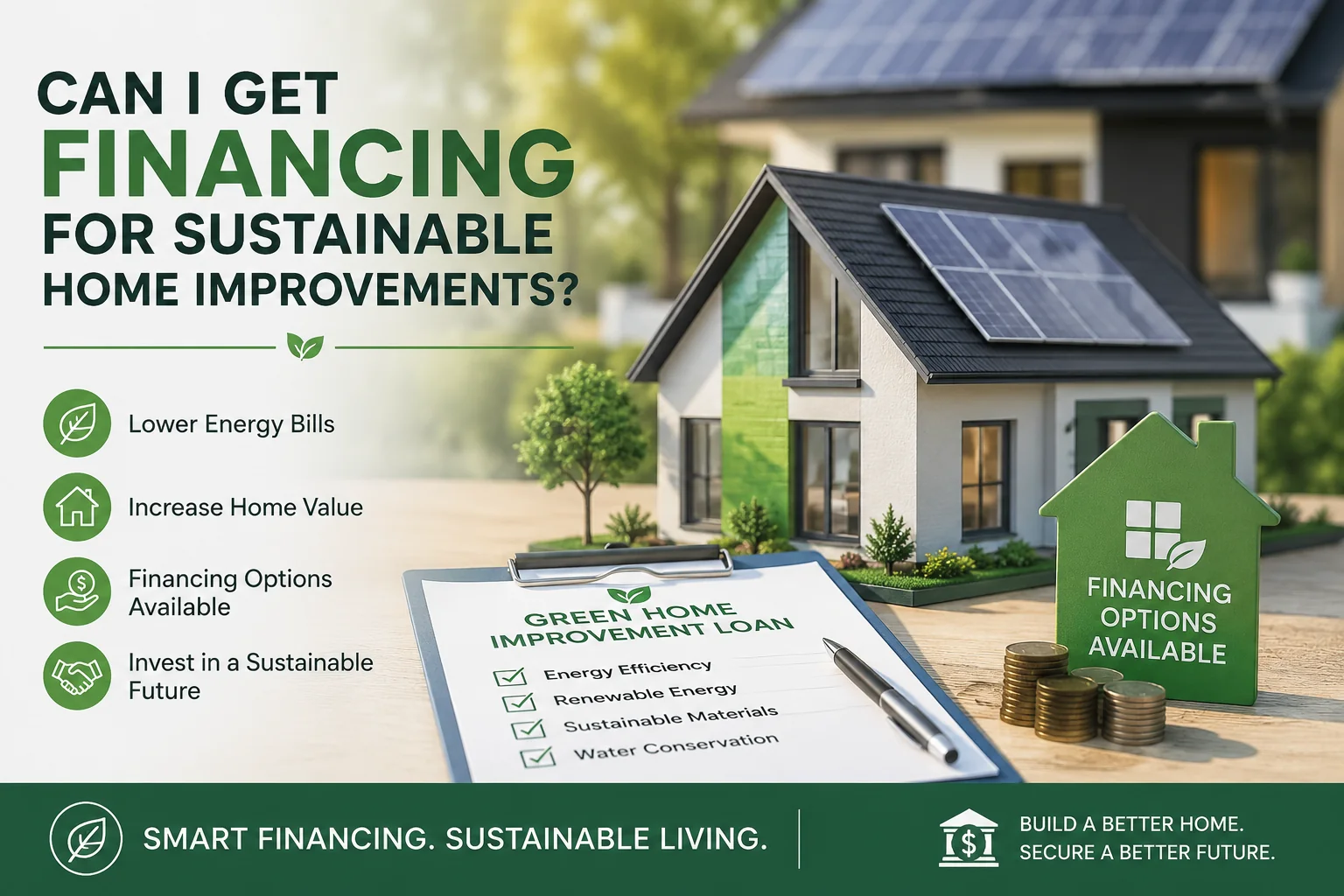
Sustainable construction is no longer a niche market; it is the industry standard. Homeowners are increasingly demanding energy-efficient upgrades, from high-performance building envelopes to smart HVAC systems and solar integrations. However, as any seasoned contractor knows, the biggest hurdle to closing a green retrofit isn’t a lack of interest—it’s the upfront cost.
When homeowners ask, "Can I get financing for sustainable home improvements?" the answer is a resounding yes.
For construction professionals, understanding and communicating these funding and incentive options is no longer just "customer service"—it is a critical sales strategy. By guiding your clients through the financial landscape, you can overcome sticker shock, increase your average ticket size, and win more bids.
Here is a comprehensive breakdown of the financing, funding, and incentive options available for sustainable home improvements, and how your construction business can leverage them.
1. Traditional and Specialized Financing Options
When the upfront capital isn't available, homeowners need borrowing options. As a contractor, being able to recommend specific financing products positions you as a trusted advisor rather than just a vendor.
Energy Efficient Mortgages (EEMs)
An EEM allows homebuyers or existing homeowners to finance the cost of adding energy-efficient features to a new or existing home.
- The Contractor Angle: EEMs are ideal for your clients who are already undergoing a major remodel or buying a fixer-upper. The cost of the green upgrades is rolled into the primary mortgage, meaning the homeowner’s monthly payment may actually decrease because the energy savings offset the added mortgage cost.
Home Equity Loans and HELOCs
For existing homeowners, tapping into home equity remains one of the most common ways to fund large-scale sustainable retrofits (like a full geothermal HVAC installation or a comprehensive building envelope upgrade).
- The Contractor Angle: Help your clients see the ROI. Sustainable upgrades significantly increase property appraisals. Remind them that a HELOC used for a high-performance remodel is an investment in their home’s equity.
Property Assessed Clean Energy (PACE)
PACE programs allow property owners to finance the cost of energy efficiency, renewable energy, and water conservation improvements. The repayment is made through an assessment on the property’s annual tax bill.
- The Contractor Angle: PACE is excellent for high-ticket commercial projects or heavy residential retrofits where the homeowner wants to preserve their cash flow. Note: Always check if PACE is available in your specific state and municipality, as regulations vary.
Private "Green" Loans
Many national and regional banks now offer specialized green loans with preferential interest rates for projects that meet specific energy-saving criteria (like LEED certification or ENERGY STAR compliance).
2. Incentives, Rebates, and Tax Credits
While financing helps spread out the cost, incentives reduce the cost entirely. The passage and ongoing implementation of the Inflation Reduction Act (IRA) has created a golden era for green building incentives.
Federal Tax Credits
Under current IRS guidelines, homeowners can claim substantial tax credits for qualified energy-efficient property.
- Energy Efficient Home Improvement Credit (25C): Homeowners can claim up to $3,200 annually for qualified energy-efficient building materials and property, such as heat pumps, biomass stoves, and high-efficiency insulation.
- Residential Clean Energy Credit (25D): Offers a 30% tax credit for renewable energy systems, including solar panels, solar water heaters, wind turbines, and battery storage technology.
State and Local Rebates
Many state energy offices and local municipalities offer cash rebates for specific upgrades. These are often tied to upgrading to electric appliances (like moving from gas to induction stoves or electric heat pumps) to meet local carbon-reduction goals.
Utility Company Programs
Local utility providers frequently offer point-of-sale rebates or post-installation cash-back incentives for upgrading to ENERGY STAR-rated appliances, smart thermostats, or high-efficiency water heaters.
3. The Contractor’s Playbook: How to Leverage Green Financing
Knowing about these options is only half the battle. To drive revenue for your construction business, you must integrate this knowledge into your sales process. Here is how to put it into practice:
Shift the Conversation from "Cost" to "Net Investment"
Never present a green upgrade without showing the "Net Cost." If a high-efficiency heat pump system costs $15,000, don't just hand over a $15,000 quote. Present it as:
- Gross Cost: $15,000
- Less Federal Tax Credit (30%): -$4,500
- Less Utility Rebate: -$1,000
- Net Investment to Homeowner: $9,500 This psychological shift makes sustainable upgrades vastly more appealing.
Partner with Green-Friendly Lenders
Build relationships with local mortgage brokers and loan officers who specialize in EEMs and green loans. When a client says they can't afford the upgrade, you can say, "I have a lending partner who specializes in financing these exact upgrades. Would you like an introduction?" This removes the friction from the buying process.
Train Your Estimators and Sales Team
Your team needs to know which of your services qualify for rebates and tax credits. Ensure your estimators are trained to ask clients about their financing goals and are equipped with the latest IRS and local utility rebate fact sheets.
Offer "Turnkey" Incentive Processing
The biggest complaint homeowners have about tax credits and rebates is the paperwork. If your company can handle the rebate applications, provide the necessary compliance documentation (like ENERGY STAR certification sheets), and make the process seamless, you will instantly stand out from competitors.
The question, "Can I get financing for sustainable home improvements?" is an opportunity in disguise. Homeowners are actively looking for ways to make their homes greener, but they need financial guidance to get there.
By mastering the landscape of green financing, tax credits, and rebates, construction professionals can transform from simple builders into strategic energy advisors. This not only accelerates your sales cycle and increases your profit margins, but it also accelerates the industry's vital transition toward a sustainable built environment.
Found this article valuable?
Share it with fellow builders, architects, or download the QR code.
Written by Shanmugam2026
Verified CreatorARQONZ Editorial Team brings you expert insights, construction guides, and architectural design trends from across the building industry.
Related Articles in Construction

What Should I Never Say to My Contractor?