
Can I Use Local Materials in Sustainable Construction?
Can I Use Local Materials in Sustainable Construction?
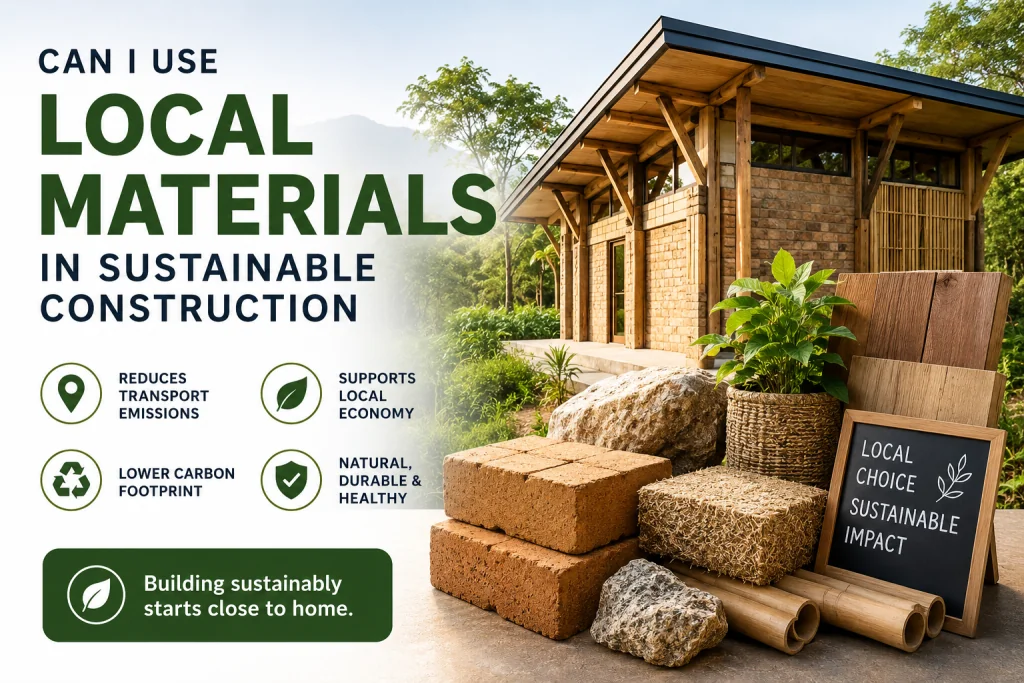
As the construction industry continues to pivot toward aggressive net-zero targets and stringent ESG (Environmental, Social, and Governance) reporting, the definition of "sustainable building" is expanding. For decades, the focus has been on high-tech solutions: solar panels, smart HVAC systems, and advanced synthetic insulations.
But a growing movement of forward-thinking architects, engineers, and contractors is looking backward to move forward. The question on the minds of many industry professionals today is: Can I use local materials in sustainable construction?
The short answer is an resounding yes. In fact, sourcing local materials is no longer just a niche architectural trend; it is a foundational pillar of modern sustainable construction. Here is a deep dive into how supporting local while going green can transform your projects, your supply chain, and your bottom line.
The Environmental Edge: Why Local Means Green
When we talk about sustainable construction, we often focus on operational carbon (the energy used to heat, cool, and light a building). However, embodied carbon—the greenhouse gas emissions arising from the manufacturing, transportation, and installation of building materials—is taking center stage in 2026’s regulatory landscape.
Using local materials directly attacks embodied carbon in two major ways:
1. Drastic Reduction in Transportation Emissions
Importing materials from across the globe relies heavily on freight shipping, aviation, and long-haul trucking. By sourcing materials from within a 100- to 500-mile radius of the job site, you drastically cut down on Scope 3 transportation emissions. This not only lowers your project’s carbon footprint but also shields your budget from volatile global fuel prices.
2. Climate-Responsive Passive Design
Local materials have historically been used in vernacular architecture because they are naturally suited to the local climate.
- In hot, arid climates: High-thermal-mass local materials like rammed earth or adobe absorb heat during the day and release it at night, naturally regulating indoor temperatures.
- In cold, forested regions: Locally sourced mass timber provides excellent natural insulation and structural integrity. By utilizing materials evolved for your specific geography, you reduce the mechanical load on the building, allowing for smaller, more efficient HVAC systems.
The Economic and Social Impact: Supporting Local
Sustainability is a three-legged stool: Environmental, Economic, and Social. Sourcing locally checks all three boxes, providing benefits that extend far beyond the job site.
- Supply Chain Resilience: Recent years have taught the construction industry harsh lessons about global supply chain fragility. Relying on local suppliers reduces lead times, minimizes the risk of geopolitical shipping delays, and ensures materials arrive exactly when the schedule demands.
- Boosting the Regional Economy: Every dollar spent on local materials stays within the community. It supports local quarries, mills, and manufacturers, creating jobs and fostering a robust regional economy.
- Preserving Regional Identity: Buildings constructed with local stone, brick, or timber naturally blend into their surroundings. This creates a sense of place and cultural continuity, resulting in structures that the community actually wants to preserve for generations.
Modernizing the Traditional: Local Materials in Action
A common misconception is that using local materials means reverting to primitive building techniques. Today’s construction technology allows us to engineer local, natural materials to meet modern commercial and residential codes.
Here is how local materials are being utilized in contemporary construction:
- Engineered Mass Timber: Locally harvested, sustainably managed timber is being transformed into Cross-Laminated Timber (CLT) and Glulam. This provides the structural strength of concrete with a fraction of the carbon footprint.
- Stabilized Rammed Earth: By mixing local subsoil with a small percentage of cement or a bio-based stabilizer, contractors can create highly durable, load-bearing walls that offer incredible thermal mass and striking aesthetics.
- Recycled Local Byproducts: True sustainability means looking at what is already in your backyard. Fly ash from local power plants, slag from steel mills, or even recycled agricultural waste (like hempcrete or straw bales) can be processed into high-performance, low-carbon concrete alternatives and insulation.
- Quarried Stone and Clay Brick: When sourced from nearby quarries and kilns, stone and brick remain some of the most durable, zero-maintenance, and endlessly recyclable materials available.
Overcoming the Challenges of Local Sourcing
While the benefits are clear, integrating local materials into your standard operating procedures does come with hurdles. Here is how to navigate them:
1. Navigating Building Codes and Standards The Challenge: Local or alternative materials may not always have pre-approved ICC (International Code Council) listings. The Solution: Work closely with local building officials early in the design phase. Utilize performance-based code pathways and provide third-party engineering testing to prove the structural and fire-resistance capabilities of your chosen local materials.
2. Ensuring Consistency and Scalability The Challenge: Local suppliers may be smaller operations that struggle with the volume required for large-scale commercial projects. The Solution: Engage local suppliers during the pre-construction phase. Give them ample lead time and consider blending local materials with standardized, sustainable commercial products to balance scale with regional sourcing.
3. Educating the Workforce The Challenge: Local materials often require specialized installation techniques that the general labor pool may not be familiar with. The Solution: Invest in workforce training. Partner with local material manufacturers to host on-site demonstrations. Upskilling your crews not only ensures quality installation but also makes your firm a leader in specialized, sustainable building techniques.
So, can you use local materials in sustainable construction? Not only can you, but you should.
Integrating local materials is a powerful strategy to reduce embodied carbon, build supply chain resilience, and create buildings that are deeply connected to their environment. It shifts the narrative of sustainable construction from simply "doing less harm" to actively regenerating local ecosystems and economies.
As the construction industry looks toward the future, the most innovative firms won't just be those that import the newest high-tech synthetic materials. The true pioneers will be those who look at their local landscape, see the potential in regional resources, and build a greener, stronger, and more resilient future right from the ground up.
Found this article valuable?
Share it with fellow builders, architects, or download the QR code.
Written by Shanmugam2026
Verified CreatorARQONZ Editorial Team brings you expert insights, construction guides, and architectural design trends from across the building industry.
Related Articles in Construction

What Should I Never Say to My Contractor?