Contractor Won't Provide References: Is That a Problem?
Contractor Won't Provide References: Is That a Problem?
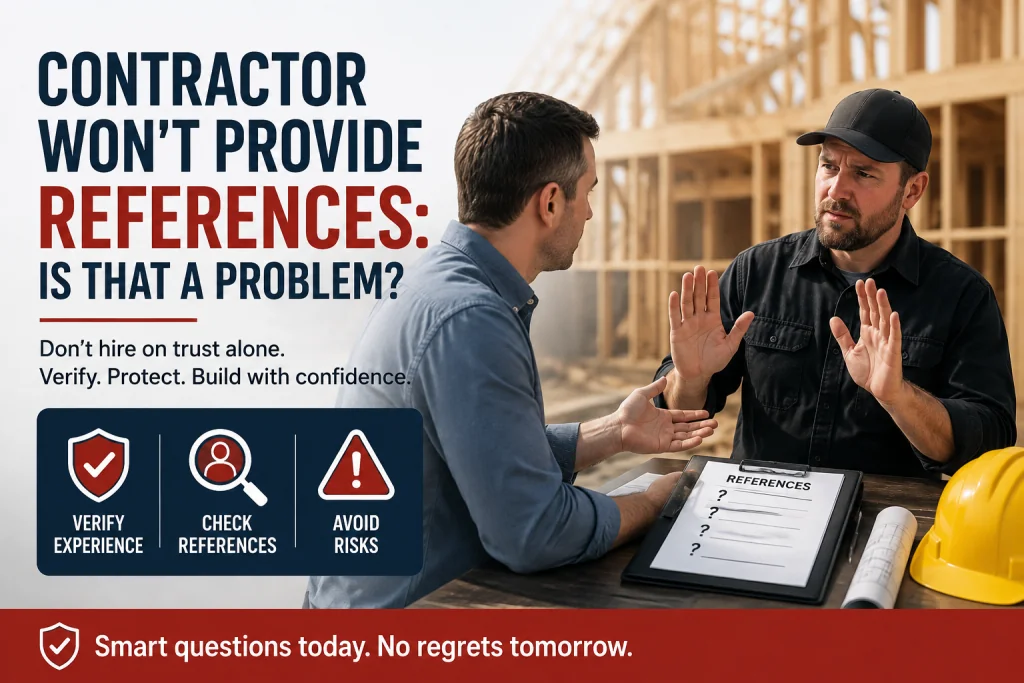
You’ve found a contractor who seems perfect for your project. Their bid is competitive, their communication is prompt, and their initial consultation was professional. But when you ask for a list of past client references, they hesitate, make an excuse, or flat-out refuse.
As a customer, your immediate reaction is concern. Is this a red flag? Should I walk away?
In the construction and remodeling industry, trust is the foundation of every successful project. When a contractor avoids providing references, it naturally triggers alarm bells. But before you cancel the contract, it is important to understand why this might be happening, when it is a dealbreaker, and how to protect yourself if you decide to move forward.
Here is a professional guide to navigating the "missing references" dilemma.
The Short Answer: Yes, It’s Usually a Red Flag
In the residential construction industry, a reputable contractor should be proud of their work and eager to connect you with past clients. A willingness to provide references demonstrates transparency, confidence, and a track record of customer satisfaction. If a contractor is highly evasive, it often indicates they have something to hide—whether that’s a history of unfinished projects, poor craftsmanship, or unresolved disputes.
However, context matters. There are a few legitimate reasons why a contractor might hesitate to hand over a list of names and phone numbers.
When a Hesitation Might Be Justified
Before you write the contractor off completely, consider these valid industry scenarios:
1. Client Privacy Concerns High-end custom home builders or contractors working in secure, gated, or high-profile neighborhoods often sign Non-Disclosure Agreements (NDAs) or simply respect their clients' desire for privacy. Past clients may not want strangers showing up at their homes or calling them to discuss their personal living spaces.
2. They Are a New Business If the contractor recently started their own LLC after years of working as a foreman or project manager for a larger firm, they might not have a portfolio of completed projects under their own company name yet.
3. Commercial vs. Residential Focus If the contractor primarily works in commercial construction, their past projects might be bound by strict corporate NDAs, making it impossible to share client contacts or even photos of the interior work.
When It’s a Massive Dealbreaker
While the scenarios above are valid, a contractor should be able to explain why they can't provide standard references. It becomes a major problem if:
- They give vague excuses: "I just don't like bothering my past clients" without offering an alternative way to prove their competence.
- They pressure you to sign immediately: Using high-pressure tactics to bypass your due diligence is a classic warning sign of a scam or a fly-by-night operation.
- They are unlicensed or uninsured: If they lack references and cannot provide proof of active licensing and liability insurance, walk away immediately.
How to Vet a Contractor Without References
If you like the contractor and believe their hesitation is due to privacy or a new business status, you still need to verify their legitimacy. Do not skip the vetting process. Instead of asking for references, use these alternative verification methods:
1. Verify Licenses and Insurance (Non-Negotiable)
Never skip this step. Ask for their state contractor’s license number and verify it on your state’s licensing board website. Furthermore, request a Certificate of Insurance (COI) for both general liability and workers' compensation. Call the insurance provider directly to ensure the policies are currently active. If they don't have insurance, you could be held liable if a worker gets injured on your property.
2. Request a Visual Portfolio
If they can't give you names, they should be able to show you work. Ask for a detailed portfolio of completed projects. Look for high-quality before-and-after photos, attention to detail, and projects similar in scope and style to yours.
3. Check Digital Footprints and Reviews
In today’s digital age, a lack of references should be offset by a strong online presence. Check their reviews on Google, the Better Business Bureau (BBB), Houzz, and specialized industry sites. Look for how the contractor responds to both positive and negative feedback.
4. Ask to Visit an Active Job Site
Instead of calling a past client, ask to visit a current job site. A professional contractor will happily let you see their work in progress. While there, look at the site's cleanliness, how materials are stored, and the safety protocols in place. A messy, disorganized active site is a strong indicator of how the final product will turn out.
5. Check Industry Affiliations
Look for memberships in professional organizations such as the National Association of Home Builders (NAHB), the National Association of the Remodeling Industry (NARI), or your local Better Business Bureau. These organizations often require members to adhere to strict codes of ethics.
As a customer, your concern when a contractor avoids giving references is entirely valid. You are making a massive financial investment, and you deserve peace of mind.
A truly professional contractor understands your need for due diligence and will work with you to prove their credibility, even if traditional references aren't an option. If they become defensive, dismissive, or refuse to provide alternative proof of their competence, listen to your instincts.
In construction, the cheapest bid is rarely the best deal, and a contractor who hides their past is rarely the right choice for your future. Take the time to vet them thoroughly, or keep looking for a professional who is proud to show you exactly what they can do
Found this article valuable?
Share it with fellow builders, architects, or download the QR code.
Written by Shanmugam2026
Verified CreatorARQONZ Editorial Team brings you expert insights, construction guides, and architectural design trends from across the building industry.
Related Articles in Construction
What Should I Never Say to My Contractor?