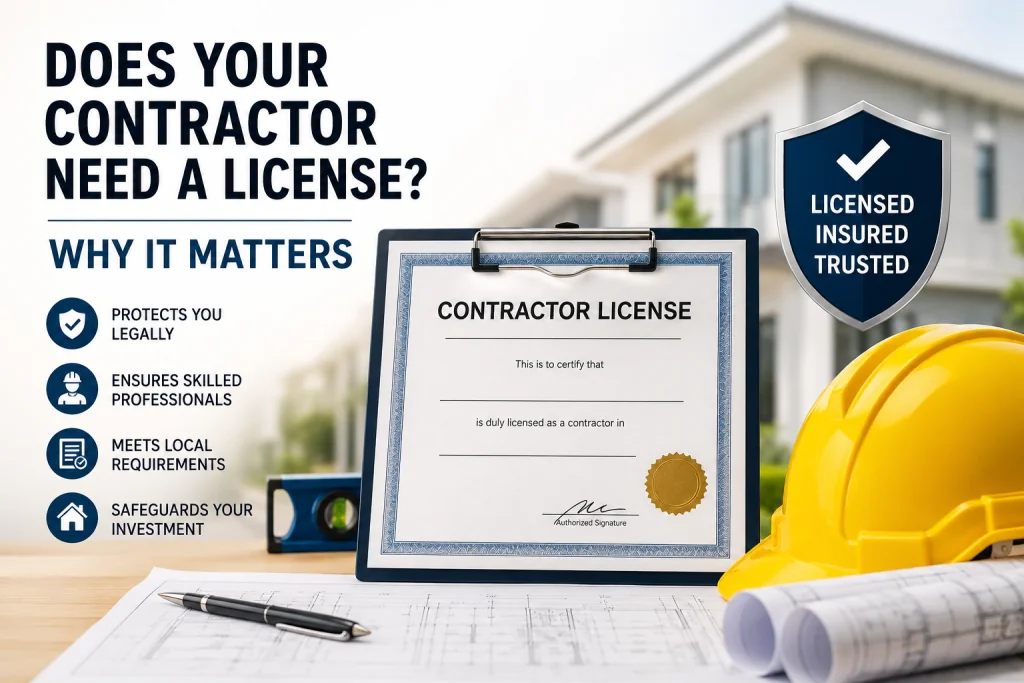
Does Your Contractor Need a License? Why It Matters
Does Your Contractor Need a License? Why It Matters
When embarking on a construction project—whether it’s a commercial build-out, a residential renovation, or a custom new build—the excitement of the design phase often overshadows the logistical realities. Yet, the most critical decision you will make long before the first shovel hits the dirt is choosing who will hold it.
In the construction industry, the question isn’t just “Can this contractor do the job?” but rather, “Is this contractor legally and professionally qualified to do the job?”
Understanding contractor credentials is no longer just about avoiding red tape; it is about mitigating risk, ensuring safety, and protecting your financial investment. Here is a comprehensive look at why your contractor’s license matters, and what those credentials actually mean for your project.
Beyond the Business Card: What a License Actually Means
A contractor’s license is often misunderstood as a mere administrative formality. In reality, it is a rigorous validation of a professional’s capability. When a contractor holds a valid license, it signifies three critical pillars of professionalism:
- Proven Competency: To obtain a license, contractors must pass comprehensive examinations that test their knowledge of building codes, construction methods, and project management.
- Financial Responsibility: Licensing boards typically require contractors to secure surety bonds and carry specific levels of insurance. This proves they have the financial backing to complete the job and cover potential liabilities.
- Regulatory Compliance: A licensed contractor is legally recognized by the state or municipality to perform construction work, meaning they are accountable to a governing body.
The Hidden Risks of Hiring an Unlicensed Contractor
It can be tempting to hire an unlicensed "handyman" or an unverified subcontractor if they offer a significantly lower bid. However, in the construction industry, the lowest bid is often a false economy. Here is why bypassing license verification can lead to disaster:
1. Severe Safety and Code Violations
Building codes exist to ensure structural integrity, fire safety, and electrical safety. Unlicensed contractors may not be up-to-date on the latest International Building Code (IBC) or local amendments. This can result in substandard work that fails municipal inspections, requiring costly tear-outs and rebuilds, or worse, creating a hazardous environment for future occupants.
2. Massive Financial Liability
If an unlicensed contractor or their employee is injured on your property and they do not carry Workers' Compensation insurance, you could be held financially liable for their medical bills and lost wages. Similarly, if they cause accidental damage to your property or a neighbor's property, their lack of General Liability insurance means your insurance premiums could skyrocket, or you could be sued out of pocket.
3. The Permit Nightmare
In most jurisdictions, only licensed contractors can pull the necessary building permits. Unlicensed contractors often attempt to bypass this by doing work "under the table." When it comes time to sell the property, unpermitted work can derail the sale, force price reductions, or result in municipal fines.
4. Voided Warranties and No Recourse
Many premium building materials and appliances require installation by a licensed professional to keep the manufacturer’s warranty valid. If an unlicensed contractor installs your new HVAC system or roof, the manufacturer may void the warranty. Furthermore, if an unlicensed contractor takes your deposit and abandons the job, you have very little legal recourse to recover your funds.
The Value of Verified Credentials
Hiring a fully licensed, bonded, and insured contractor shifts the risk away from you and onto the professionals equipped to handle it.
- Accountability: If a dispute arises, you can file a complaint with the state licensing board, which has the power to mediate, fine, or revoke the contractor's license.
- Quality Assurance: Licensed contractors have a reputation to maintain. They are more likely to hire skilled subcontractors, pull proper permits, and stand behind their workmanship.
- Streamlined Inspections: Because they understand local codes, licensed contractors ensure the project passes inspections smoothly, keeping your timeline and budget on track.
How to Verify Contractor Credentials
Never take a contractor’s word that they are licensed and insured. Protect your project by taking these proactive steps:
- Check the State Licensing Board: Visit your state’s official contractor licensing website. Verify that the license is active, in good standing, and covers the specific trade (e.g., electrical, plumbing, general building) required for your project.
- Request a Certificate of Insurance (COI): Ask for a current COI for both General Liability and Workers' Compensation. Pro tip: Call the insurance provider directly using the number on the policy to ensure the coverage is actually active.
- Verify the Bond: Ensure their surety bond is current. This provides a financial safety net if the contractor fails to complete the job or pay for permits/subcontractors.
- Check for Disciplinary Action: Look into their history. Have there been past complaints, lawsuits, or license suspensions?
In construction, credentials are not just paperwork; they are the foundation of trust. A contractor’s license is your first line of defense against poor workmanship, legal liabilities, and financial loss.
Before signing a contract or handing over a deposit, do your due diligence. Understanding and verifying contractor credentials ensures that your project is built on a solid foundation—both physically and legally.
Found this article valuable?
Share it with fellow builders, architects, or download the QR code.
Written by Shanmugam2026
Verified CreatorARQONZ Editorial Team brings you expert insights, construction guides, and architectural design trends from across the building industry.
Related Articles in Construction
What Should I Never Say to My Contractor?