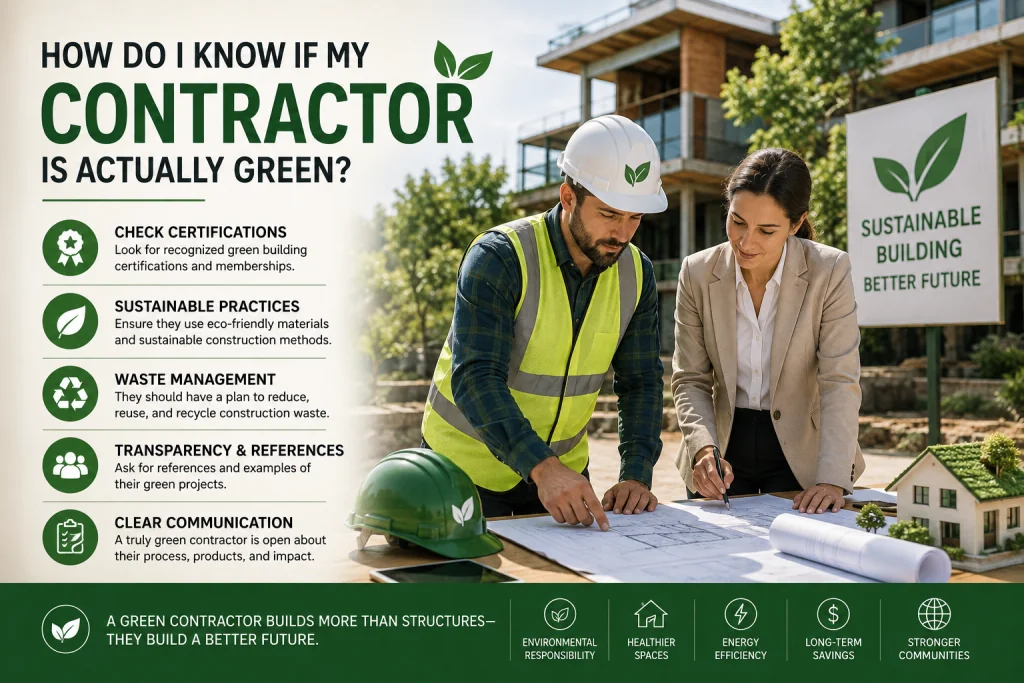
How Do I Know If My Contractor Is Actually Green?
How Do I Know If My Contractor Is Actually Green?
Sustainability is no longer just a buzzword in the construction industry; it is a baseline expectation. From stringent environmental regulations to the rising demand for ESG (Environmental, Social, and Governance) compliant buildings, project owners and developers are actively seeking "green" contractors.
But as the demand for sustainable construction has surged, so has "greenwashing." Many firms are slapping eco-friendly labels on their marketing materials without changing their underlying practices.
So, how do you separate the genuinely sustainable builders from the ones just playing the part? The answer lies in two critical pillars: verification and accountability.
Here is how project owners and developers can rigorously evaluate their contractors to ensure their green promises translate into measurable, on-the-ground results.
The Pitfall of Greenwashing in Construction
Before diving into solutions, it is important to understand the risk. If a contractor fails to deliver on their sustainability promises, the consequences extend far beyond environmental damage. Project owners can face:
- Reputational damage if a highly publicized "green" building fails to meet its energy or carbon targets.
- Financial penalties for failing to meet regulatory mandates or secure promised tax incentives.
- Operational inefficiencies resulting from poor waste management or energy-heavy construction methods.
To mitigate these risks, you must move beyond marketing brochures and focus on hard data.
Part 1: Verification – Proving the "Green" Claims
Verification is the process of confirming that a contractor’s sustainability claims are factual, measurable, and backed by evidence. During the procurement and bidding phase, look for the following:
1. Recognized Certifications and Memberships
A truly green contractor invests in formal training and certifications. Look for:
- Company-wide: ISO 14001 (Environmental Management Systems) certification.
- Project-level expertise: A robust roster of LEED AP (Leadership in Energy and Environmental Design), BREEAM, WELL, or Envision certified professionals on staff.
- Industry affiliations: Membership in recognized green building councils or sustainable construction alliances.
2. Supply Chain Transparency
A contractor is only as green as the materials they use. Ask for their material procurement policies. Do they prioritize suppliers with Environmental Product Declarations (EPDs)? Do they track Scope 3 emissions (indirect emissions in their supply chain)? A verified green contractor will have a transparent, documented process for sourcing low-carbon, recycled, or locally extracted materials.
3. Historical Data and Case Studies
Don’t just ask what they can do; ask what they have done. Request detailed case studies of past projects that highlight specific sustainability metrics. Look for hard numbers:
- What was their waste diversion rate?
- How much water was saved during construction?
- What was the embodied carbon of the materials used compared to the industry baseline?
Part 2: Accountability – Keeping Them on Track
Verification gets the right contractor on the job, but accountability ensures they maintain their green standards from groundbreaking to handover. Sustainability cannot be an afterthought; it must be baked into the contract.
1. Embed Sustainability KPIs into the Contract
Do not leave sustainability to "best efforts." Define clear Key Performance Indicators (KPIs) in the construction contract. These should include:
- Maximum allowable construction waste (with a minimum diversion target, e.g., 75%+).
- Limits on idling time for heavy machinery to reduce emissions.
- Specific targets for indoor air quality management during construction.
2. Mandate Regular Sustainability Reporting
Accountability requires visibility. Require the contractor to submit monthly sustainability reports alongside their standard financial and schedule updates. These reports should detail waste tracking tickets, energy usage on-site, material sourcing logs, and any environmental incidents. If they cannot provide this data easily, they likely aren't tracking it.
3. Tie Financial Incentives and Penalties to Green Metrics
Money talks. Structure the contract so that a portion of the contractor’s payment or final retention is tied to achieving the agreed-upon sustainability KPIs. Conversely, include clauses for financial penalties if they fail to meet minimum environmental thresholds (such as illegal dumping or failing to meet waste diversion mandates).
4. Require Third-Party Audits
For large-scale or highly sensitive projects, do not rely solely on the contractor’s self-reporting. Hire an independent third-party sustainability consultant to audit the site periodically. This removes the bias and ensures the contractor is adhering to the verified environmental management plan.
A Quick Checklist for Your Next RFP
When issuing your next Request for Proposal (RFP), include a mandatory "Sustainability and Environmental Management" section. Require bidders to answer:
- Provide your company’s ISO 14001 certificate or equivalent environmental management policy.
- Detail your historical average for construction waste diversion over the last three years.
- Explain your process for verifying the embodied carbon of primary building materials.
- Provide a sample monthly environmental reporting template you use on active job sites.
In today’s construction landscape, claiming to be "green" is easy; proving it is hard. As an owner or developer, you cannot afford to take a contractor's marketing at face value.
By prioritizing rigorous verification during the bidding process and establishing ironclad accountability mechanisms in your contracts, you protect your investment, ensure regulatory compliance, and genuinely contribute to a more sustainable built environment.
True green construction isn't about the promises made in the boardroom; it's about the data proven in the dirt. Make sure your contractor is ready to show you the numbers.
Found this article valuable?
Share it with fellow builders, architects, or download the QR code.
Written by Shanmugam2026
Verified CreatorARQONZ Editorial Team brings you expert insights, construction guides, and architectural design trends from across the building industry.
Related Articles in Construction
What Should I Never Say to My Contractor?