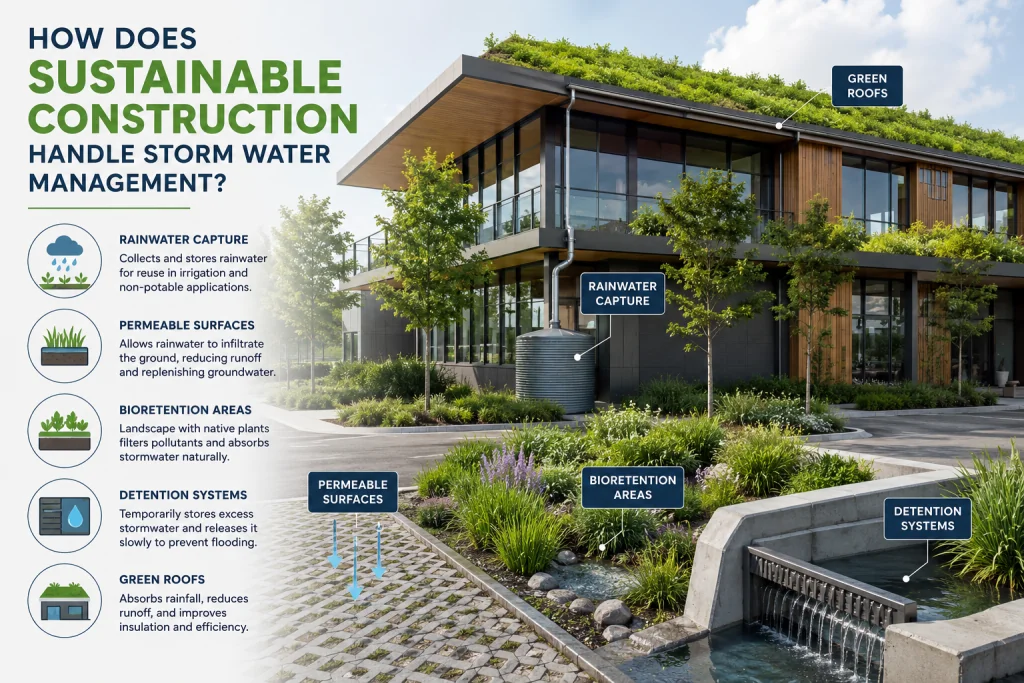
How Does Sustainable Construction Handle Storm Water Management?
How Does Sustainable Construction Handle Storm Water Management?
As urbanization accelerates and extreme weather events become more frequent, the construction industry is facing a critical challenge: what to do with all the rain.
Historically, the standard approach to stormwater was simple and destructive—pave over the earth and pipe the water as quickly as possible into local sewer systems. Today, this outdated method leads to overwhelmed municipal infrastructure, severe localized flooding, and the pollution of natural waterways.
Sustainable construction flips this paradigm. By integrating Low Impact Development (LID) and green infrastructure, modern builders are mimicking natural hydrology. But how exactly does sustainable construction handle stormwater management in practice?
Here is a look at the practical, environmental solutions transforming how the construction industry manages water, from the groundbreaking phase to the final ribbon-cutting.
Phase 1: Managing Runoff During Active Construction
Before a sustainable building is even finished, the construction site itself is a major source of stormwater pollution. Exposed soil and heavy machinery can lead to severe sediment runoff. Sustainable contractors manage this proactively through a robust Stormwater Pollution Prevention Plan (SWPPP).
- Phased Grading: Instead of clearing the entire site at once, sustainable builders clear and grade only the areas actively being worked on, preserving natural vegetation to act as a buffer.
- Advanced Sediment Controls: Beyond standard silt fences, modern sites utilize biodegradable rolled erosion control products (RECPs), sediment traps, and fiber rolls that naturally break down over time, reducing landfill waste.
- Stabilized Construction Exits: Using washout racks and permeable stone pads at site exits prevents mud and sediment from being tracked onto public roadways.
Phase 2: Long-Term Stormwater Solutions in the Built Environment
Once construction is complete, the focus shifts to managing the water that falls on the finished property. Sustainable construction utilizes several practical, high-ROI environmental solutions:
1. Permeable Pavements
Traditional asphalt and concrete are impervious, forcing water to run off. Permeable pavements—made from porous asphalt, pervious concrete, or interlocking pavers—allow water to pass directly through the surface.
- How it works: The water seeps into a stone reservoir base below the pavement, where it is slowly filtered into the native soil.
- Industry Benefit: Reduces the need for massive, expensive underground detention tanks and mitigates the urban heat island effect.
2. Green Roofs and Living Walls
Vegetated roof systems are a hallmark of sustainable commercial construction. By replacing a barren rooftop with soil and drought-resistant plants, buildings can absorb a significant percentage of rainfall.
- How it works: The plants and growing medium absorb rainwater, which is then released back into the atmosphere through evapotranspiration.
- Industry Benefit: Green roofs drastically reduce peak stormwater runoff, extend the lifespan of the roof membrane by protecting it from UV rays, and provide superior building insulation, lowering HVAC costs.
3. Bioswales and Rain Gardens
These are engineered, shallow channels or depressions planted with deep-rooted native vegetation. They are often integrated into parking lot medians, sidewalks, and landscape buffers.
- How it works: As stormwater runs off roofs and pavements, it is directed into these features. The plants and specialized soil mixtures naturally filter out heavy metals, oils, and pollutants before the water percolates into the groundwater.
- Industry Benefit: They are highly cost-effective compared to "gray infrastructure" (pipes and concrete channels) and add immense aesthetic and ecological value to the property.
4. Rainwater Harvesting and Reuse Systems
Instead of treating rainwater as a waste product to be disposed of, sustainable construction treats it as a resource to be captured.
- How it works: Cisterns and underground storage tanks collect runoff from roofs and paved areas. This water is then filtered and repurposed for landscape irrigation, toilet flushing, or cooling tower makeup.
- Industry Benefit: Significantly reduces municipal water consumption, lowering utility bills for the building owner and earning valuable points toward LEED and other green building certifications.
5. Smart Stormwater Tech
In 2026, sustainability meets smart technology. Modern sustainable sites are increasingly equipped with IoT (Internet of Things) sensors in retention ponds and green infrastructure. These sensors monitor soil moisture and water levels in real-time, automatically releasing stored water before a forecasted storm to maximize retention capacity.
The Business Case: Why the Construction Industry Must Adapt
For contractors, developers, and project managers, adopting these practical environmental solutions is no longer just about "being green"—it is a vital business strategy.
- Regulatory Compliance: Municipalities are increasingly mandating strict on-site retention requirements. Designing with sustainable stormwater solutions ensures compliance and avoids costly fines or project delays.
- Reduced Infrastructure Costs: By managing water on-site through permeable pavements and bioswales, developers can significantly downsize expensive underground pipe networks and concrete detention vaults.
- Increased Property Value: Tenants and buyers are actively seeking sustainable, resilient buildings. Green infrastructure enhances curb appeal, improves occupant well-being, and boosts overall marketability.
- Future-Proofing Assets: As climate change leads to heavier, more unpredictable rainfall, buildings designed with robust, sustainable stormwater management are far less likely to suffer from flooding and water damage.
Sustainable construction handles stormwater management by shifting the mindset from "how do we drain this water away?" to "how do we manage this water on-site?"
By integrating permeable surfaces, green roofs, bioswales, and smart harvesting systems during the design and build phases, the construction industry can protect local waterways, comply with evolving regulations, and deliver highly resilient, cost-effective projects.
Found this article valuable?
Share it with fellow builders, architects, or download the QR code.
Written by Shanmugam2026
Verified CreatorARQONZ Editorial Team brings you expert insights, construction guides, and architectural design trends from across the building industry.
Related Articles in Construction

What Should I Never Say to My Contractor?