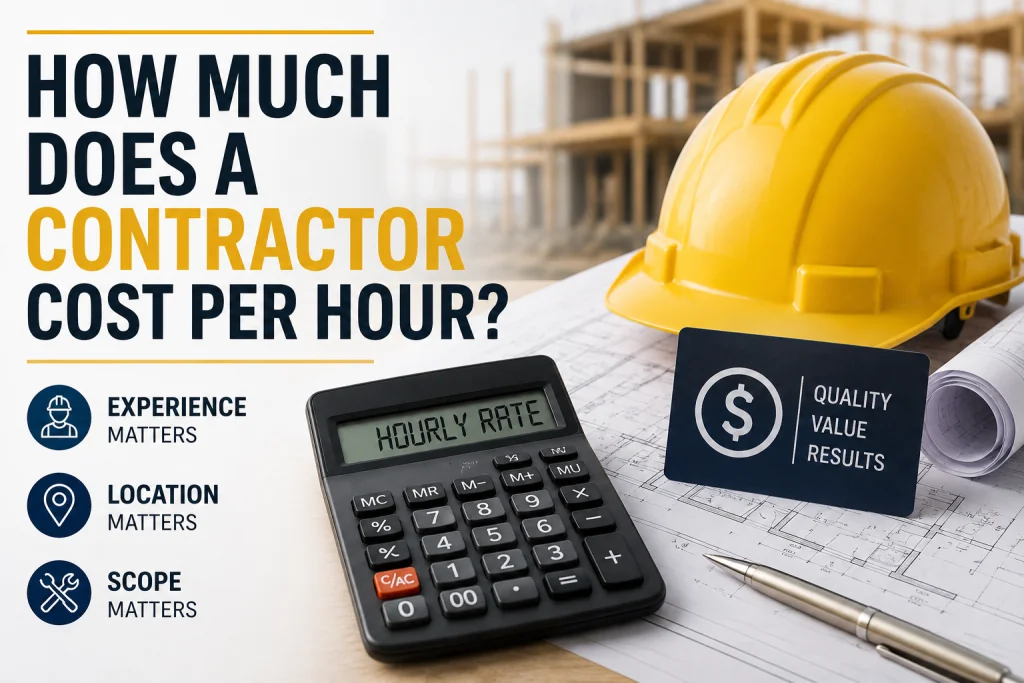
How Much Does a Contractor Cost Per Hour?
How Much Does a Contractor Cost Per Hour?
Meta Description: Planning a construction project? Discover the average hourly rates for contractors in 2026, the factors that influence pricing, and how to choose the right pricing model for your build.
Whether you are a homeowner planning a major renovation, a property manager overseeing commercial upgrades, or a developer breaking ground on a new build, one of the first questions you will ask is: "How much will this cost?"
When it comes to hiring construction professionals, understanding contractor pricing is essential for keeping your project on budget. However, contractor rates are rarely a one-size-fits-all number. In the current 2026 construction market, pricing is influenced by a complex mix of labor costs, overhead, geographic location, and project scope.
In this guide, we will break down average contractor hourly rates, explore the factors that drive these costs, and help you understand the different pricing models used in the construction industry.
The Short Answer: Average Contractor Hourly Rates (2026)
It is important to distinguish between a General Contractor (GC) and Specialty Trade Contractors. A GC’s hourly rate typically covers project management, coordination, and oversight, while trade contractors charge for hands-on, specialized labor.
Here is a general breakdown of what you can expect to pay per hour for labor in today’s market:
- General Contractor (Management/Oversight): $75 – $150+ per hour (Note: Many GCs prefer to charge a percentage of the total project cost—typically 10% to 20%—rather than an hourly rate).
- Electricians: $85 – $165 per hour
- Plumbers: $95 – $185 per hour
- HVAC Technicians: $80 – $160 per hour
- Carpenters & Finishers: $70 – $130 per hour
- Roofers: $75 – $140 per hour
- Concrete/Masonry Workers: $70 – $120 per hour
Disclaimer: These rates reflect labor costs only. They do not include the cost of materials, equipment rentals, permits, or contractor markups.
5 Factors That Influence Contractor Rates
If you receive two quotes for the same job and one is significantly higher than the other, it doesn’t necessarily mean the more expensive contractor is overcharging. Here is what actually goes into a contractor’s hourly rate:
1. Overhead and Insurance
A professional contractor’s rate isn’t just paying for their time on your site; it’s funding their business. This includes liability insurance, workers' compensation, vehicle maintenance, tool depreciation, office space, and employee benefits. Reputable contractors carry robust insurance to protect you from liability, which inherently raises their hourly rate.
2. Licensing and Expertise
Master-level tradespeople and highly experienced general contractors command higher rates. You are paying for years of specialized training, problem-solving expertise, and the guarantee that the work will meet or exceed local building codes.
3. Geographic Location
Construction costs vary wildly by region. A plumber in a high-cost-of-living metropolitan area like New York or San Francisco will charge significantly more per hour than a plumber in a rural Midwestern town, simply due to local economic conditions and the cost of doing business.
4. Project Complexity and Risk
Working in a tight crawl space, handling hazardous materials (like asbestos abatement), or executing highly complex custom architectural details requires specialized skills and carries higher risk. Contractors will adjust their rates to reflect the difficulty and danger of the task.
5. Market Demand and Labor Shortages
The construction industry has faced fluctuating labor availability over the last few years. When skilled trades are in high demand and short supply, contractors have the leverage to maintain premium pricing.
Understanding Pricing Models: Hourly vs. Fixed vs. Cost-Plus
When you sit down with a contractor, you will need to agree on a pricing structure. Understanding the three main pricing models will help you choose the best one for your specific project.
1. Time and Materials (T&M) / Hourly Pricing
- How it works: You pay for the actual hours worked plus the cost of materials used.
- Best for: Small jobs, emergency repairs, or projects where the full scope of work is unknown (e.g., opening up a wall and discovering water damage).
- Pros/Cons: Highly flexible, but carries a financial risk for the client, as the final cost is uncapped.
2. Fixed Price (Flat Rate / Stipulated Sum)
- How it works: The contractor provides a single, total price for the entire project based on a detailed scope of work.
- Best for: Well-defined projects like room additions, new builds, or standard renovations.
- Pros/Cons: Provides budget certainty for the client. However, contractors will usually build a "contingency buffer" into the price to protect themselves against unforeseen issues.
3. Cost-Plus (Time and Materials with a Guaranteed Maximum Price)
- How it works: The client pays the actual cost of labor and materials, plus a fixed fee or percentage markup for the contractor’s overhead and profit.
- Best for: Large, complex, or custom projects where the design may evolve during construction.
- Pros/Cons: Offers total transparency on material costs, but requires a high level of trust between the client and the contractor.
How to Evaluate a Contractor’s Quote
When comparing bids, do not automatically choose the lowest price. In construction, a bid that is drastically lower than the competition is often a red flag. It may indicate that the contractor has underestimated the scope, failed to factor in proper insurance, or plans to use subpar materials.
Instead, evaluate quotes based on:
- Clarity: Is the scope of work detailed and easy to understand?
- Communication: Did the contractor ask insightful questions and listen to your needs?
- Credentials: Are they fully licensed, bonded, and insured? (Always ask for proof!)
- References: Do they have a track record of completing similar projects on time and on budget?
Understanding contractor pricing is about more than just looking at an hourly rate; it’s about recognizing the value, expertise, and overhead that a professional brings to your job site. By understanding how rates are calculated and choosing the right pricing model for your project, you can ensure a smooth, successful build without unpleasant financial surprises.
Ready to start your next construction project? Don't leave your budget to chance. Contact [Insert Your Company Name Here] today for a transparent, detailed estimate. Our team of licensed, insured, and highly skilled professionals is ready to bring your vision to life with integrity and craftsmanship.
Found this article valuable?
Share it with fellow builders, architects, or download the QR code.
Written by Shanmugam2026
Verified CreatorARQONZ Editorial Team brings you expert insights, construction guides, and architectural design trends from across the building industry.
Related Articles in Construction

What Should I Never Say to My Contractor?