How to Get a Contractor Quote: What to Expect
How to Get a Contractor Quote: What to Expect
Whether you are planning a custom home build, a major commercial renovation, or a much-needed residential remodel, the first official step is always the same: getting a contractor quote.
However, many property owners approach the estimating process unprepared, leading to misaligned expectations, budget blowouts, and project delays. In the construction industry, a successful project is built on a foundation of clear communication and detailed planning—and that starts long before the first hammer swings.
If you are preparing to hire a construction professional, here is everything you need to know about preparing for the estimate process and what to expect along the way.
Phase 1: Preparing for the Estimate Process
The quality of the quote you receive is directly tied to the information you provide. Contractors cannot price a project based on guesswork. Before you even pick up the phone to call a construction firm, take time to prepare.
1. Define Your Scope of Work
Be as specific as possible about what you want. "Updating the kitchen" is too vague. "Removing a load-bearing wall, installing custom oak cabinetry, quartz countertops, and upgrading the electrical panel" is a scope a contractor can actually price. Write down your must-haves versus your "nice-to-haves."
2. Gather Visuals and Inspiration
Compile a folder of photos, sketches, Pinterest boards, or architectural drawings. Visual aids bridge the gap between your imagination and the contractor’s understanding. If you have existing blueprints, surveys, or HOA guidelines, have these ready to share.
3. Establish a Realistic Budget
You don’t necessarily need to hand over your exact maximum budget on day one, but you should know your financial boundaries. A professional contractor will use your budget range to recommend appropriate materials and design solutions, saving you from falling in love with a design that requires a total financial overhaul.
4. Understand the Difference: Estimate vs. Quote
- An Estimate is a rough approximation of costs based on limited information.
- A Quote (or Bid) is a fixed-price offer based on a highly detailed, finalized scope of work.
- Pro Tip: Always aim for a detailed, fixed-price quote before signing a contract.
Phase 2: The On-Site Consultation (What to Expect)
Once you’ve done your preliminary prep, you will schedule an on-site visit. Here is what a professional site consultation should look like.
The Walkthrough and Assessment
A reputable contractor will not give you a final quote over the phone. They need to see the site. Expect them to measure spaces, inspect existing structures (checking for plumbing, electrical, and structural integrity), assess site access, and take photos.
The Q&A Session
This is a two-way street. The contractor will ask you detailed questions about your lifestyle, business operations, or usage of the space. In return, you should ask them:
- What is your anticipated timeline for this project?
- Will you be using subcontractors, and are they insured?
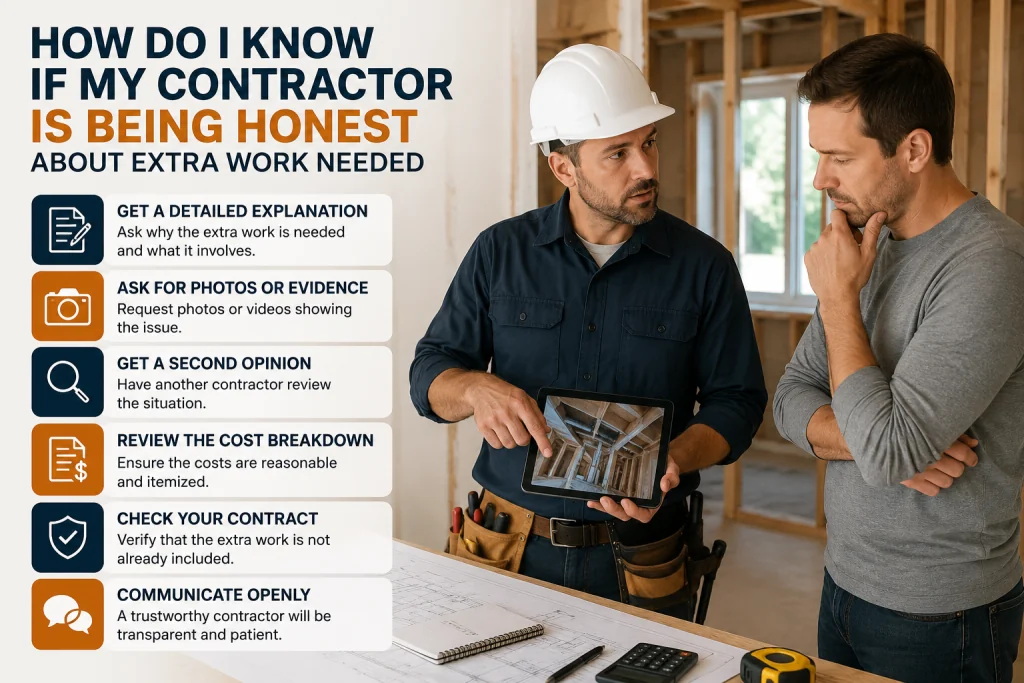
- How do you handle unexpected issues (like finding mold or bad wiring behind a wall)?
- Who will be my direct point of contact during the build?
The Professionalism Check
Pay attention to soft skills. Do they show up on time? Do they listen to your concerns, or do they immediately try to talk you into a more expensive upgrade? Do they treat your property with respect? How a contractor acts during the estimate is usually how they will act during the build.
Phase 3: Reviewing the Quote
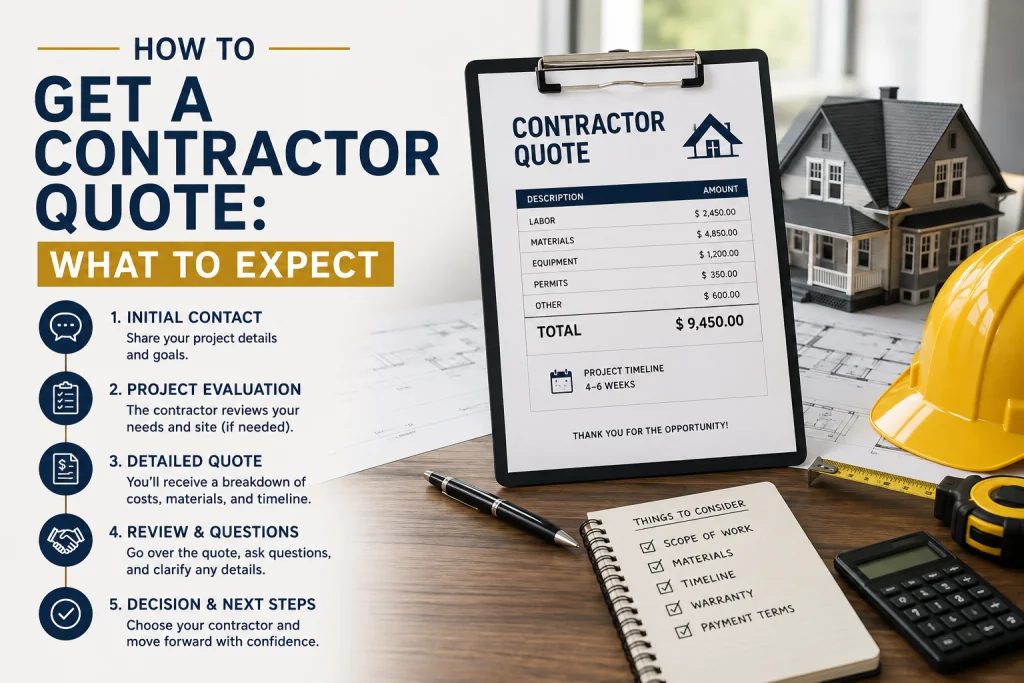
After the site visit, the contractor will calculate labor, materials, permits, and overhead to generate your quote. When the document arrives, do not just look at the bottom line. A professional construction quote should be highly detailed and include the following:
- Company Credentials: License numbers, proof of insurance (liability and workers' comp), and contact info.
- Detailed Scope of Work: A step-by-step breakdown of the work to be performed.
- Material Specifications: Exact brands, models, grades, and quantities of materials (e.g., "30 squares of GAF Timberline HDZ Shingles," not just "new roof").
- Payment Schedule: A realistic timeline of payments tied to project milestones. (Red flag: Any contractor asking for 50% or more upfront in cash).
- Project Timeline: Expected start date and estimated completion date.
- Warranties: Clear details on both manufacturer warranties for materials and the contractor’s workmanship guarantee.
🚩 Red Flags to Watch Out For
As you collect and compare quotes, be wary of these industry warning signs:
- The Lowball Bid: If a quote is significantly lower than the others, the contractor has likely miscalculated, missed part of the scope, or plans to use subpar materials.
- Vague Language: Avoid quotes that use terms like "miscellaneous materials" or "labor to complete."
- High-Pressure Tactics: A professional contractor will give you time to review the quote, ask questions, and compare it with others. Never let someone rush you into signing.
Getting a contractor quote shouldn't be a stressful guessing game. By taking the time to prepare your scope of work, understanding the on-site process, and knowing what to look for in the final document, you protect your investment and set the stage for a smooth construction experience
Found this article valuable?
Share it with fellow builders, architects, or download the QR code.
Written by Shanmugam2026
Verified CreatorARQONZ Editorial Team brings you expert insights, construction guides, and architectural design trends from across the building industry.
Related Articles in Construction
What Should I Never Say to My Contractor?