
What Are Energy-Efficient Windows and Are They Worth It?
What Are Energy-Efficient Windows and Are They Worth It?
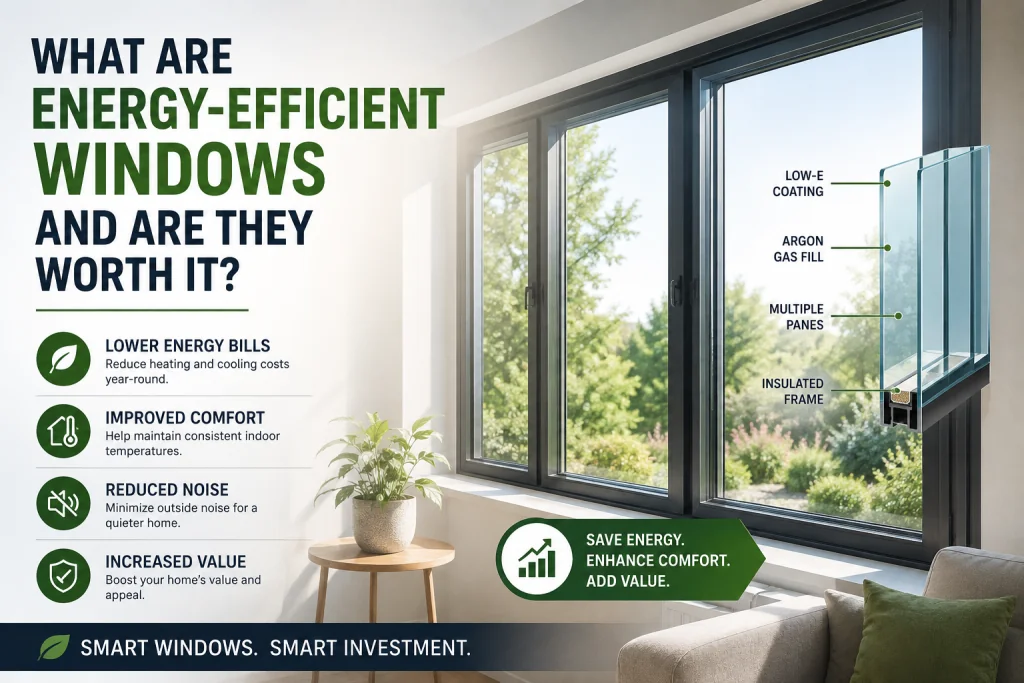
As building codes tighten and client demand for sustainable, high-performance homes reaches an all-time high, the construction industry is constantly evaluating which "green upgrades" actually deliver a return on investment.
Among the most debated and specified upgrades in modern residential and commercial construction is the energy-efficient window. But what exactly separates a standard window from a high-performance one, and from a builder’s perspective, are they worth the premium?
Let’s break down the anatomy of energy-efficient windows, evaluate their ROI, and see how they stack up against other popular green building upgrades.
The Anatomy of an Energy-Efficient Window
To understand the value, we first need to look past the glass. Modern energy-efficient windows are complex assemblies designed to manage heat transfer, solar gain, and air leakage. For construction professionals, specifying the right window means understanding four key components:
- Glazing and Gas Fills: Double or triple-pane glass is the baseline. The space between the panes is filled with inert gases like Argon or Krypton, which are denser than air and significantly reduce conductive heat transfer.
- Low-Emissivity (Low-E) Coatings: These microscopically thin, metallic coatings applied to the glass reflect infrared light (heat) while allowing visible light to pass through. In heating-dominated climates, Low-E coatings keep heat inside; in cooling-dominated climates, they reflect solar heat away.
- Warm Edge Spacers: The spacer that holds the glass panes apart is a common thermal bridge. "Warm edge" spacers are made of low-conductivity materials (like stainless steel, foam, or structural silicone) to reduce condensation and heat loss at the edge of the glass.
- Frame Materials and Design: The frame accounts for a significant portion of the window's thermal performance. Fiberglass, composite, and heavily insulated vinyl frames outperform standard aluminum. For commercial or modern architectural designs, thermally broken aluminum frames are required to prevent thermal bridging.
The Metrics that Matter: When reviewing spec sheets, focus on the U-Factor (rate of non-solar heat loss; lower is better) and the Solar Heat Gain Coefficient / SHGC (fraction of solar radiation admitted; lower is better for cooling climates, higher for heating climates).
Are They Worth It? The ROI for Builders and Clients
The short answer is yes, but the "worth" is realized differently depending on who you are talking to.
1. For the Builder and Developer
- Code Compliance and Future-Proofing: With the 2021/2024 IECC (International Energy Conservation Code) and state-specific stretch codes mandating stricter envelope performance, high-performance windows are no longer optional; they are a baseline requirement.
- Fewer Callbacks: Upgraded windows with warm-edge spacers and proper Low-E coatings drastically reduce the risk of interior condensation. This protects your drywall, prevents mold growth, and saves you from costly warranty callbacks.
- Market Differentiation: In a competitive housing market, marketing a home as "certified energy-efficient" or "Passive House ready" allows you to command a premium price point.
2. For the Homeowner and End-User
- Operational Savings: High-performance windows reduce the load on HVAC systems, translating to measurable monthly utility savings.
- Comfort and Durability: They eliminate cold drafts and radiant heat loss near the glass, improving occupant comfort. Furthermore, they block up to 75% of UV rays, protecting the client’s interior finishes and flooring from fading.
Evaluating Windows Against Other Popular Green Upgrades
When advising clients on where to allocate their green building budget, it helps to contextualize windows against other popular upgrades. Here is how they stack up:
- Windows vs. Upgraded Insulation (Spray Foam/Rigid Board):
- Verdict: Insulation generally offers a faster, more direct ROI per dollar spent because it covers a larger surface area. However, windows are the "weakest link" in the building envelope. Upgrading insulation but keeping poor windows is like putting a thick winter coat on someone wearing sandals. Both are necessary.
- Windows vs. High-Efficiency HVAC (Heat Pumps/ERVs):
- Verdict: A high-efficiency HVAC system will condition the space faster, but if the envelope (windows/walls) is leaky, the system will run constantly. Upgrading windows reduces the required capacity of the HVAC system, potentially allowing you to downsize the mechanical equipment and offset the cost of the windows.
- Windows vs. Solar PV Panels:
- Verdict: Solar panels generate energy; windows conserve it. The golden rule of green building is to reduce the load first (via windows and insulation) before generating energy (via solar). Downsizing a solar array because the windows reduced the heating/cooling load is a massive cost saver.
The Golden Rule: Installation is Everything
As construction professionals, we know that the most expensive, high-performance window on the market will fail miserably if installed poorly.
An energy-efficient window is only as good as its integration into the building envelope. To ensure these upgrades are actually "worth it," your crews must adhere to strict installation protocols:
- Proper Flashing: Integrating the window flashing correctly with the Water-Resistive Barrier (WRB) to manage bulk water.
- Air Sealing: Using low-expansion spray foam or specialized tapes to create a continuous, airtight seal at the rough opening. Air leakage will destroy the U-factor performance of the glass.
- Structural Support: Ensuring proper shimming to prevent the frame from racking, which can break the hermetic seal of the IGU (Insulated Glass Unit).
Energy-efficient windows are absolutely worth the investment. They are a critical component of the building envelope that ensures code compliance, protects the structure from moisture, reduces mechanical loads, and provides a tangible selling point for the end buyer.
As an industry, our job is not just to install products, but to educate our clients on the holistic value of high-performance building. When specified correctly and installed flawlessly, energy-efficient windows pay dividends in performance, comfort, and reputation for years to come.
Found this article valuable?
Share it with fellow builders, architects, or download the QR code.
Written by Shanmugam2026
Verified CreatorARQONZ Editorial Team brings you expert insights, construction guides, and architectural design trends from across the building industry.
Related Articles in Construction

What Should I Never Say to My Contractor?