What Are Normal Construction Work Hours?
What Are Normal Construction Work Hours?
When the general public thinks of construction, the old adage "sunup to sundown" often comes to mind. However, the modern construction industry is a highly regulated, meticulously planned machine. While early mornings and hard work are staples of the trade, understanding what constitutes "normal" construction work hours is vital for project managers, contractors, and clients alike.
Whether you are scheduling a commercial high-rise or managing a residential remodel, aligning expectations with industry standards ensures safety, compliance, and productivity. Let’s break down normal construction work hours and what a typical daily schedule actually looks like on the job site.
The Baseline: What Are "Normal" Construction Hours?
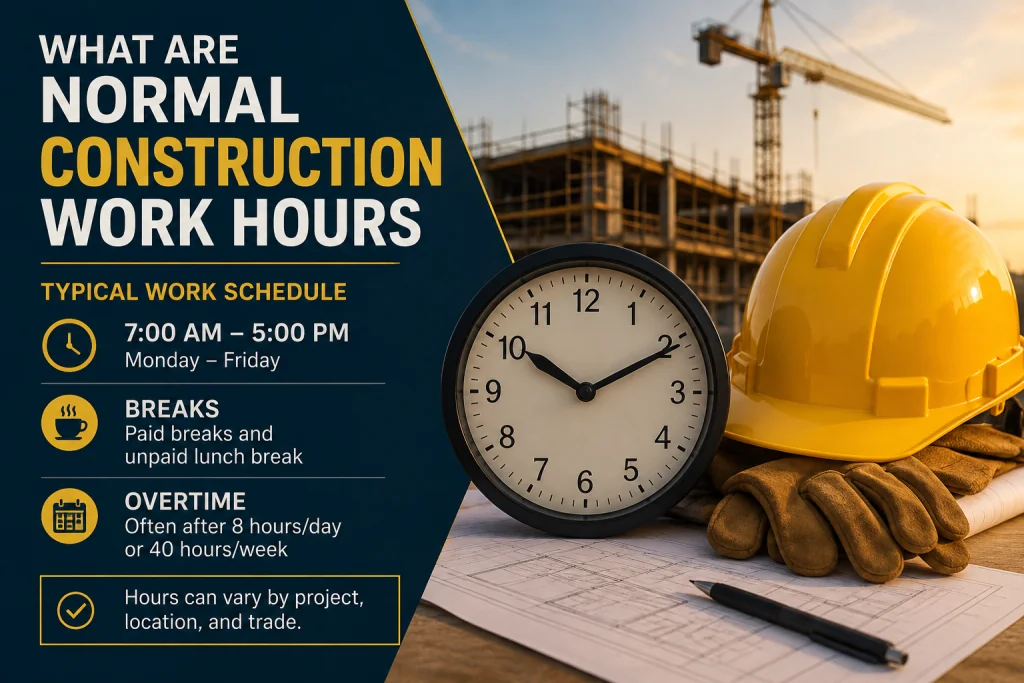
In the construction industry, the standard workweek is generally 40 hours, Monday through Friday.
The most common daily shifts fall into one of two categories:
- The Early Shift: 7:00 AM to 3:30 PM (with a 30-minute unpaid lunch).
- The Standard Shift: 8:00 AM to 5:00 PM (with a 30-to-60-minute unpaid lunch).
However, "normal" is a flexible term in construction. The actual hours are heavily dictated by local municipal noise ordinances, the type of project (commercial vs. residential), union agreements, and seasonal weather changes.
Anatomy of a Typical Construction Daily Schedule
A professional job site doesn't just start with workers swinging hammers. A well-structured day prioritizes safety, coordination, and site maintenance. Here is what a typical daily schedule looks like on a standard 7:00 AM to 3:30 PM commercial or residential site:
6:30 AM – 7:00 AM: Arrival and Preparation
Crews arrive, clock in, and gear up. This time is used for donning Personal Protective Equipment (PPE), inspecting tools, and reviewing the day’s specific tasks.
7:00 AM – 7:15 AM: The "Toolbox Talk" (Safety First)
Before any heavy machinery starts, the site superintendent or foreman leads a daily safety meeting. This includes a Job Safety Analysis (JSA), discussing site-specific hazards for the day, reviewing weather impacts, and ensuring everyone is mentally focused.
7:15 AM – 10:00 AM: Core Production (Morning Push)
This is when the most physically demanding or critical tasks are tackled. Crews are fresh, the weather is usually cooler, and focus is at its peak.
10:00 AM – 10:15 AM: Morning Break
A mandated 10-to-15-minute break for hydration and rest.
10:15 AM – 12:00 PM: Continued Production
Work resumes. Subcontractors usually arrive on-site during this window if they are scheduled for specific mid-day installations.
12:00 PM – 12:30 PM (or 1:00 PM): Lunch Break
A 30-to-60-minute unpaid break. On larger commercial sites, this may be staggered to ensure site security and continuous monitoring of active hazards.
12:30 PM – 3:00 PM: Afternoon Operations
The afternoon shift focuses on continuing the day's goals, material staging for the next day, and coordinating with suppliers for deliveries.
3:00 PM – 3:30 PM: Cleanup and Handover
Amateur sites leave cleanup for the next morning; professional sites shut down 30 to 45 minutes early to clean up. This includes securing tools, sweeping walkways, managing debris, and the foreman completing the daily site log. A clean site is a safe site.
4 Factors That Alter the Standard Schedule
While the schedule above is the blueprint, real-world construction requires adaptability. Several factors will shift these normal hours:
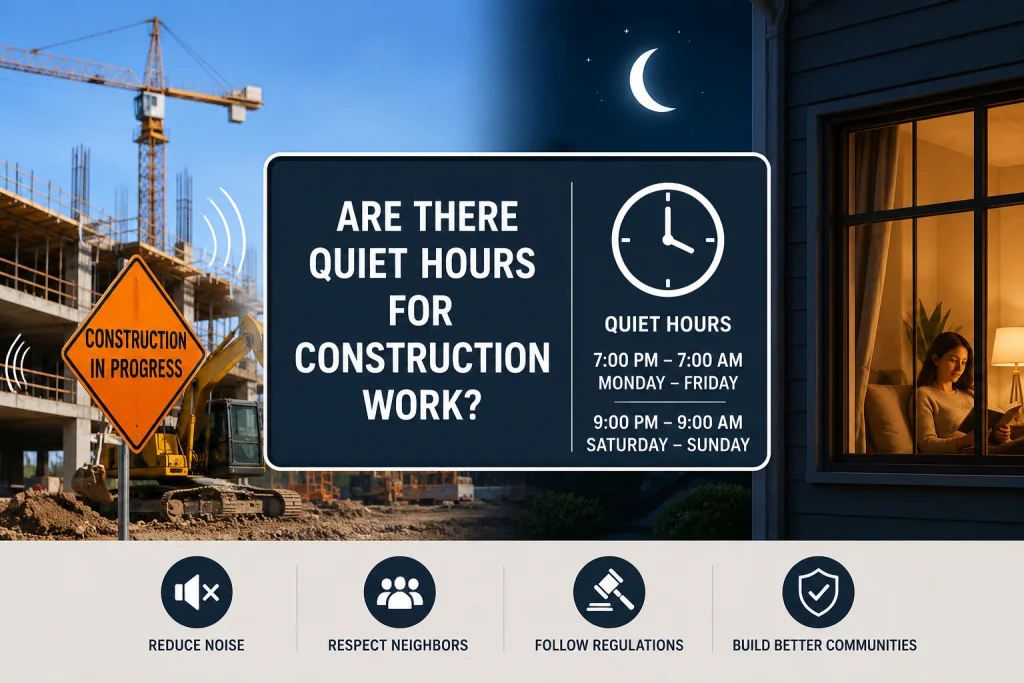
1. Municipal Noise Ordinances Local laws strictly dictate when work can begin and end, particularly in residential areas. Most cities prohibit loud construction noise before 7:00 AM and after 6:00 PM on weekdays, and often ban weekend work entirely unless special permits are pulled. Commercial zones may have more lenient hours, allowing for early material staging before the official start time.
2. Seasonality and Weather In the peak of summer, many contractors shift to "dawn patrols," starting at 5:30 or 6:00 AM to beat the midday heat and comply with OSHA heat-illness guidelines. Conversely, in winter, shorter daylight hours may require the use of temporary site lighting or result in earlier wrap-up times.
3. Material Constraints (The "Concrete Pour" Rule) Certain tasks dictate the schedule, not the other way around. If a concrete pour is scheduled, the crew will work the hours required by the material's curing process and the ready-mix truck's delivery schedule, regardless of whether it falls outside normal hours.
4. Union vs. Non-Union Agreements On unionized job sites, work hours, break times, and overtime rules are strictly defined by collective bargaining agreements. These contracts often mandate precise start/stop times and specific penalty rates for any work done outside the standard 8-hour window.
The Reality of Overtime and "Crunch Time"
It is an industry reality that construction schedules sometimes slip, or critical milestones require a push. When this happens, 10-hour or even 12-hour shifts (often 4 days a week, known as a 4/10 schedule) become the norm.
However, project managers must tread carefully here. Fatigue is a leading cause of job site accidents. If extended hours become the standard rather than the exception, safety protocols degrade, and error rates spike. Overtime should be used as a strategic tool to recover a schedule, not as a band-aid for poor initial planning.
Normal construction work hours generally revolve around an 8-hour day, starting between 7:00 AM and 8:00 AM, but the true hallmark of a professional construction firm is how they manage the margins of that schedule.
By prioritizing morning safety briefings, enforcing strict end-of-day cleanups, and respecting local noise ordinances, contractors can maintain high productivity while fostering good relationships with the community and ensuring their crew goes home safely every day.
Found this article valuable?
Share it with fellow builders, architects, or download the QR code.
Written by Shanmugam2026
Verified CreatorARQONZ Editorial Team brings you expert insights, construction guides, and architectural design trends from across the building industry.
Related Articles in Construction

What Should I Never Say to My Contractor?