What Are the Red Flags When Hiring a Contractor?
What Are the Red Flags When Hiring a Contractor?
Meta Description: Planning a construction project? Learn the critical red flags when hiring a contractor and the warning signs to watch for before you sign on the dotted line.
Suggested Featured Image: A professional contractor reviewing blueprints on a job site, or a close-up of a handshake between a client and a contractor.
Whether you are planning a massive commercial build-out, a multi-family residential development, or a high-end home renovation, hiring the right construction contractor is the most critical decision you will make.
The construction industry is filled with highly skilled, ethical, and professional builders. However, it also has its share of "fly-by-night" operators. Choosing the wrong contractor can lead to blown budgets, severe delays, subpar craftsmanship, and even legal nightmares.
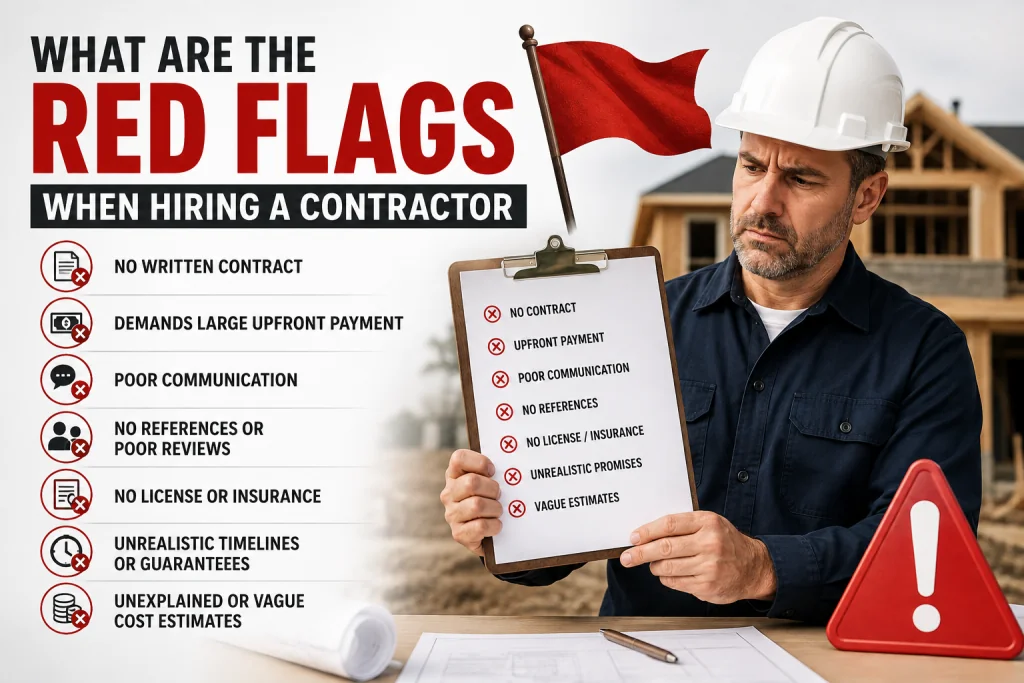
To protect your investment, you need to know what to look out for. Here are the top red flags when hiring a contractor and the warning signs to watch for before you sign a contract.
1. Lack of Proper Licensing and Insurance
In the construction industry, licensing and insurance are non-negotiable.
- The Red Flag: The contractor is evasive when asked for their license number, or they claim they "don't need insurance for a job this size."
- Why it Matters: If a contractor is unlicensed, they may not be up to code with local building regulations, which can result in failed inspections. More importantly, if they lack general liability and workers' compensation insurance, you could be held financially liable if a worker gets injured on your property or if property damage occurs.
- The Fix: Always ask for a Certificate of Insurance (COI) and verify their state and local contractor licenses independently.
2. Demanding a Massive Upfront Payment
Cash flow is vital for any construction project, but paying for work before it is done is a massive risk.
- The Red Flag: The contractor demands 50% or more of the total project cost upfront before any materials are ordered or work begins.
- Why it Matters: While a deposit is standard to secure your spot on their schedule and order initial materials, industry standard typically dictates a deposit of 10% to 30%. Demanding the majority of the cash upfront removes their incentive to finish the job and leaves you with zero leverage if they abandon the project.
- The Fix: Tie payments to a clear schedule of values (milestones). You should only pay for work that has been completed and inspected.
3. A Vague or Missing Written Contract
A handshake is not a contract, especially in construction.
- The Red Flag: The contractor tries to rush you into starting work without a detailed, written contract, or provides a one-page agreement that lacks specifics.
- Why it Matters: Without a detailed Scope of Work (SOW), you are leaving room for massive misunderstandings. If it isn't in writing, it isn't happening. Vague contracts lead to endless "change orders" and surprise costs.
- The Fix: Ensure the contract includes a detailed scope of work, specific materials to be used (brands, grades, colors), a start and end date, a payment schedule, and a clear process for handling change orders.
4. The Bid is Suspiciously Low
We all love a good deal, but in construction, you generally get what you pay for.
- The Red Flag: One contractor’s bid is 20% or 30% lower than all the other bids you received.
- Why it Matters: A suspiciously low bid usually means the contractor has either misunderstood the scope of work, is planning to use substandard materials, or is intending to hit you with massive change orders once the project is underway. They may also be cutting corners on safety or labor costs.
- The Fix: Compare apples to apples. Ask the low-bidding contractor to explain their numbers. If they can't justify the savings, walk away.
5. Poor Communication and Unprofessionalism
How a contractor treats you during the bidding process is exactly how they will treat you during the build.
- The Red Flag: They don't return your calls, show up late to the initial estimate, send texts from an unprofessional email address (e.g., builder_guy123@gmail.com), or fail to provide a polished, detailed proposal.
- Why it Matters: Construction projects are stressful and require constant communication. If they are disorganized and unresponsive before they even have your money, they will be impossible to reach when a critical issue arises on the job site.
- The Fix: Hire a contractor who communicates promptly, professionally, and transparently from day one.
6. Reluctance to Provide References or a Portfolio
A reputable construction company should be proud of their past work.
- The Red Flag: The contractor says they "don't have a portfolio," refuses to provide references, or tells you that their past clients are "too busy" to be bothered.
- Why it Matters: They may be hiding a history of failed projects, lawsuits, or unhappy clients.
- The Fix: Ask for at least three recent references and a portfolio of similar projects. More importantly, actually call the references and ask about the contractor's cleanliness, timeliness, and problem-solving skills. If possible, ask to visit a current job site.
7. Suggesting You "Skip" Pulling Permits
Permits exist to ensure the safety and structural integrity of a build.
- The Red Flag: The contractor suggests that you don't need a permit for the work, or offers to do the work "under the table" to save you money on permit fees.
- Why it Matters: Bypassing permits is illegal and incredibly dangerous. If the unpermitted work is discovered later, you could be forced to tear it down. Furthermore, unpermitted work can void your property insurance and cause massive headaches when you try to sell the property.
- The Fix: A professional contractor will always pull the necessary permits and schedule the required municipal inspections.
When hiring a contractor, your due diligence is your best defense. If a contractor exhibits even one of these red flags, it is usually best to move on to the next candidate.
The right construction partner will welcome your questions, provide transparent documentation, and prove their legitimacy without hesitation. They aren't just building a structure; they are building a relationship based on trust.
Found this article valuable?
Share it with fellow builders, architects, or download the QR code.
Written by Shanmugam2026
Verified CreatorARQONZ Editorial Team brings you expert insights, construction guides, and architectural design trends from across the building industry.
Related Articles in Construction
What Should I Never Say to My Contractor?