What Makes a Good Contractor Reference (And How to Spot a Fake)?
What Makes a Good Contractor Reference (And How to Spot a Fake)?
When it comes to hiring a construction contractor, your due diligence is your best defense against blown budgets, delayed timelines, and subpar craftsmanship. While licenses, insurance, and portfolios are essential, references are often the ultimate tie-breaker.
However, in an era where online reviews can be bought and reference lists can be easily fabricated, how can you be sure the feedback you’re getting is genuine?
Whether you are a homeowner planning a major remodel or a property manager overseeing a commercial build-out, this guide will help you separate stellar, genuine references from suspicious, fabricated ones.
Part 1: The Anatomy of a Good Contractor Reference
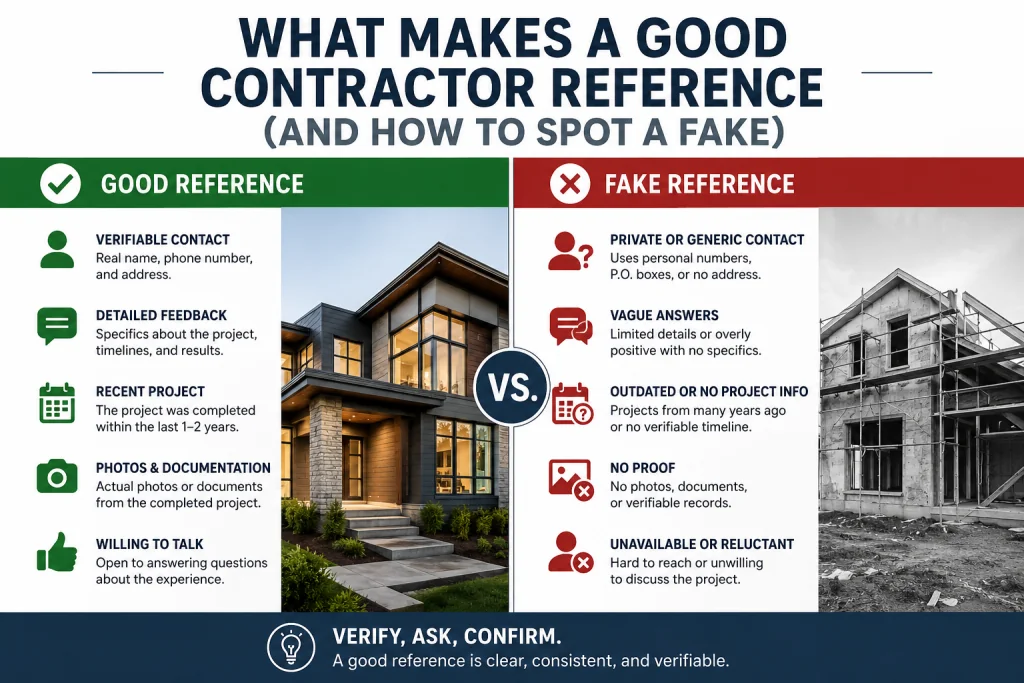
A genuine reference isn’t just a name and a phone number; it is a detailed, verifiable account of a past client’s experience. Here is what makes a reference truly valuable:
1. Specificity and Detail
A good reference can speak to the specifics of the project. They should be able to discuss the original scope of work, how the contractor handled unexpected issues (like hidden water damage or supply chain delays), and the final outcome.
2. Recency and Relevance
The best references are recent (within the last 12 to 18 months) and relevant to your project. If you are hiring a contractor to build a custom deck, a reference from a client who had their kitchen remodeled three years ago isn't as valuable as one who just had a similar outdoor structure built last month.
3. Willingness to Communicate
A genuine past client will be happy to talk to you. They won’t just hand you a written testimonial; they will agree to a 10-minute phone call or an in-person site visit.
4. Balanced Feedback
No construction project is 100% perfect. A genuine reference will often mention a minor hiccup—such as a delayed material delivery or a messy job site—but will follow up with how the contractor resolved the issue. Absolute, flawless praise can sometimes be a red flag.
Part 2: How to Spot a Fake or Suspicious Reference
Scammers and unreliable contractors know that customers ask for references. To bypass this hurdle, some will fabricate them. Here are the red flags that indicate a reference might be fake:
🚩 Red Flag 1: Vague or Scripted Praise
If the reference sounds like a marketing brochure rather than a real person, be suspicious. Phrases like, "They were very professional and did a great job on the synergy of the build," lack the grounded reality of a real construction experience. Real clients talk about dust, noise, communication, and the final punch list.
🚩 Red Flag 2: Unreachable Contacts
You call the number provided, and it goes straight to a generic voicemail, or the person who answers claims they "don't remember" the contractor. If a contractor cannot provide a working, direct line to a past client, the reference is likely fake.
🚩 Red Flag 3: The "Friend or Relative" Vibe
Sometimes, contractors don't make up names entirely; they just list their friends, family members, or employees. If the reference is overly defensive of the contractor, refuses to answer critical questions, or the conversation feels overly informal and unstructured, it might be a personal connection rather than a paying client.
🚩 Red Flag 4: Mismatched Timelines or Scopes
If the reference claims the contractor built a 5,000-square-foot addition in 2025, but your research shows the contractor’s license wasn't active or their crew wasn't large enough to handle a project that size at that time, the story doesn't add up.
🚩 Red Flag 5: Refusal to Allow a Site Visit
A genuine contractor should be proud of their finished work. If the contractor makes excuses as to why you cannot drive by the house or visit the commercial site to see the finished project, they are hiding something.
Part 3: How to Verify References Like a Pro
Don't just take the reference list at face value. Take control of the vetting process with these actionable steps:
Ask the Right Questions
When you get a reference on the phone, move past "Were you happy?" Ask construction-specific questions:
- “Did the project finish on time and within the original budget?”
- “How did the contractor handle change orders or unexpected costs?”
- “Was the job site kept clean and safe?”
- “How responsive were they during the warranty period after the job was done?”
Cross-Check with Third-Party Platforms
A genuine reference should have a digital footprint. Ask for the client's last name or the project address and cross-check it with the contractor’s online portfolio, Google Reviews, Houzz, or the Better Business Bureau (BBB).
Verify Through Local Building Departments
This is the ultimate "hack" for verifying a contractor's work. If a reference claims the contractor did a major structural remodel at a specific address, you can call your local city or county building department. Permits are public record. If the contractor pulled the permits under their correct license, you know the project—and the contractor's involvement in it—is 100% real.
In the construction industry, a good reference is a mirror reflecting a contractor’s integrity, communication, and craftsmanship. By knowing what a genuine reference looks like and staying alert to the red flags of a fabricated one, you protect your investment and ensure your project is in capable hands.
Found this article valuable?
Share it with fellow builders, architects, or download the QR code.
Written by Shanmugam2026
Verified CreatorARQONZ Editorial Team brings you expert insights, construction guides, and architectural design trends from across the building industry.
Related Articles in Construction
What Should I Never Say to My Contractor?