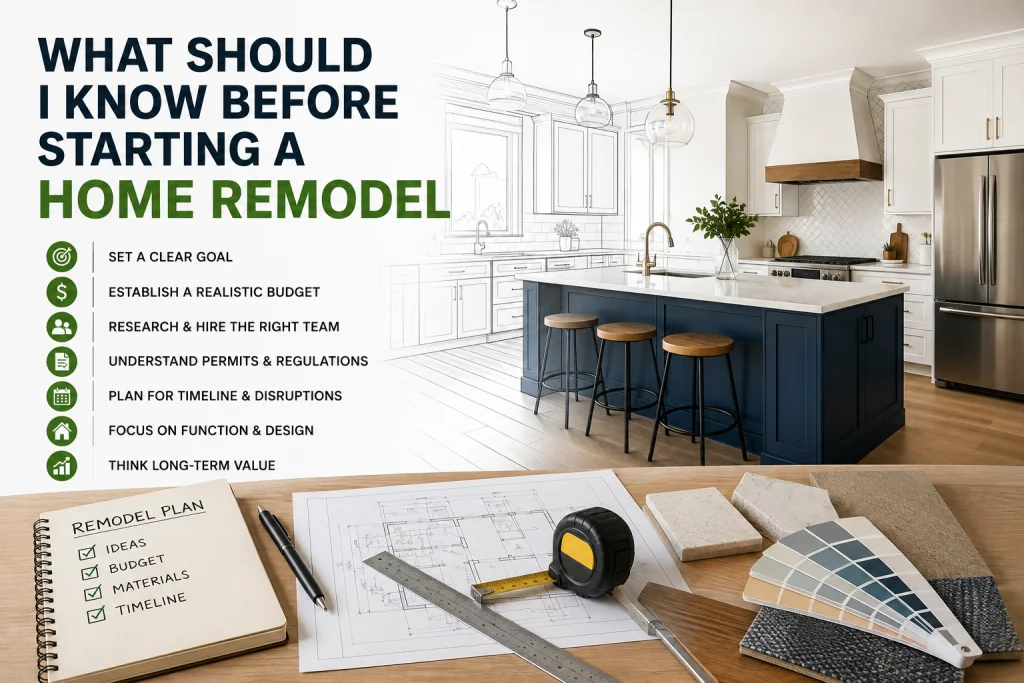
What Should I Know Before Starting a Home Remodel?
What Should I Know Before Starting a Home Remodel?
A home remodel is one of the most exciting investments you can make. Whether you are dreaming of a chef’s kitchen, a spa-like primary bathroom, or an open-concept living space, the end result has the power to transform not just your home, but your daily life.
However, as any seasoned construction professional will tell you: the success of a remodel is determined long before the first sledgehammer swings.
Without proper preparation, a dream project can quickly turn into a stressful ordeal plagued by budget overruns and delayed timelines. To help you navigate the process smoothly, we’ve put together this guide on general remodeling preparation. Here is what you need to know before starting your home remodel.
1. Define Your Scope: Needs vs. Wants
The most common pitfall in residential construction is "scope creep"—when a project gradually expands beyond its original boundaries, inflating costs and extending timelines.
Before meeting with a contractor, sit down and clearly define the scope of your project.
- Identify your "Needs": These are the non-negotiables. (e.g., "We need more counter space and an updated electrical system.")
- Identify your "Wants": These are the dream additions. (e.g., "We’d love a built-in espresso station and heated floors.")
Having a clear, prioritized list helps your construction team provide accurate estimates and ensures that if budget adjustments are needed, you know exactly which "wants" can be scaled back without sacrificing the core "needs" of the project.
2. Build a Realistic Budget (With a Contingency Fund)
When it comes to remodeling, the cheapest bid is rarely the best. A professional budget should be comprehensive, transparent, and realistic.
When preparing your finances, remember to factor in:
- Hard Costs: Materials, labor, and equipment.
- Soft Costs: Architectural drawings, engineering fees, and building permits.
- The Contingency Fund: This is the golden rule of construction. Always set aside 15% to 20% of your total budget for unforeseen issues. Once the walls are opened, contractors might find outdated wiring, plumbing leaks, or structural deficiencies that must be brought up to code. A contingency fund ensures these surprises don't derail your project.
3. Understand the Timeline and Phases of Construction
Homeowners often underestimate how long a remodel takes. Construction is a highly orchestrated sequence of events, and rushing it leads to poor craftsmanship.
Familiarize yourself with the standard phases of a remodel:
- Design and Planning: Finalizing layouts, selecting materials, and securing permits.
- Demolition and Rough-In: Tearing out the old and running new plumbing, HVAC, and electrical behind the walls.
- Inspections: City or county officials verifying that the rough-in work meets building codes.
- Finishes: Drywall, flooring, cabinetry, painting, and trim.
- Punch List: The final walkthrough to address minor touch-ups before project completion.
Pro Tip: Material lead times can vary wildly. Custom cabinets, specialty tiles, and specific appliances can take weeks or months to arrive. Finalize your material selections early to keep the project moving.
4. Choose the Right Construction Partner
Your contractor is your partner in this process. The relationship you build with them will dictate the success of the remodel. When vetting construction professionals, look beyond the bottom line.
Check their credentials: Ensure they are fully licensed, bonded, and carry both liability and workers' compensation insurance. Ask for references: Speak to past clients and ask about the contractor's communication, cleanliness, and adherence to the budget. Review the contract: A professional contract should include a detailed scope of work, a payment schedule tied to project milestones (never pay for work not yet completed), and a clear timeline.
5. Prepare Your Home and Your Life
Construction is inherently messy, noisy, and disruptive. Preparing your living space will save you a massive amount of daily friction.
- Clear the zone: Remove all furniture, decor, and personal items from the work area. If you are remodeling a kitchen or bath, clear out the cabinets and pantry.
- Protect your home: Ask your contractor about their dust-control measures. They should be using zip-walls, negative air pressure systems, and floor protection to keep construction dust out of the rest of your house.
- Establish ground rules: Discuss working hours, parking for the crew, bathroom access, and how daily cleanup will be handled.
- Plan for living arrangements: If the remodel involves shutting off your main water, power, or your only bathroom, plan accordingly. You may need to set up a temporary kitchenette in the dining room or arrange to stay elsewhere for a few days during major utility transitions.
A successful home remodel doesn't happen by accident; it is the result of meticulous preparation, clear communication, and a trusted relationship with your construction team. By defining your scope, budgeting realistically, understanding the timeline, and preparing your home, you set the stage for a beautiful, stress-free transformation.
Found this article valuable?
Share it with fellow builders, architects, or download the QR code.
Written by Shanmugam2026
Verified CreatorARQONZ Editorial Team brings you expert insights, construction guides, and architectural design trends from across the building industry.
Related Articles in Construction

What Should I Never Say to My Contractor?