
What's the Difference Between a Contractor and a Handyman?
What's the Difference Between a Contractor and a Handyman?
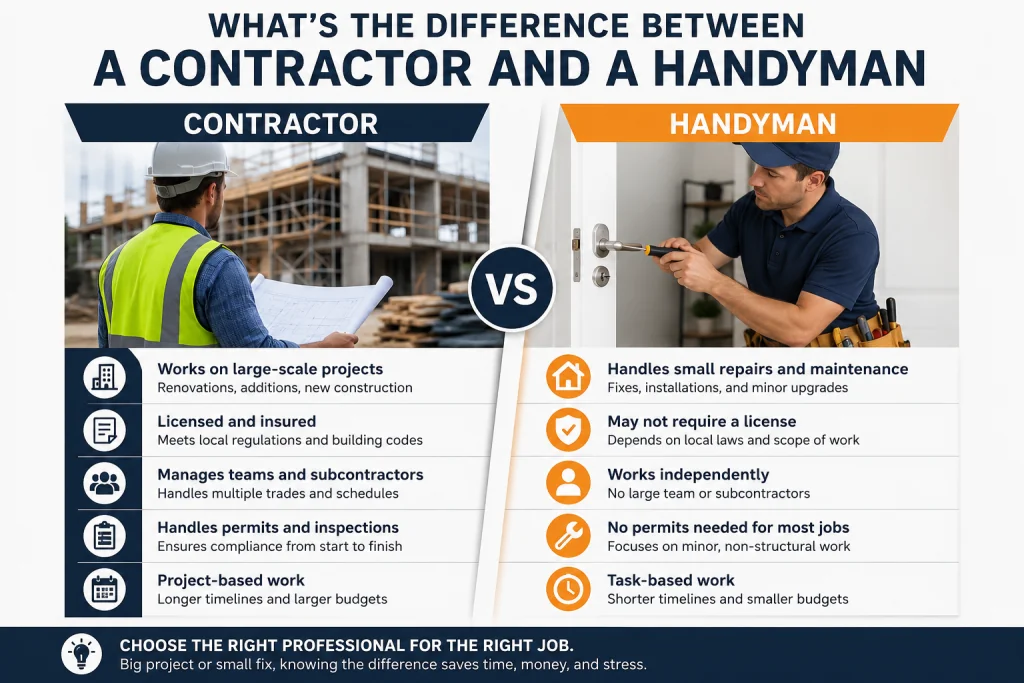
When it comes to property maintenance, renovations, or repairs, one of the most common dilemmas property owners and managers face is deciding who to call. Do you need a licensed contractor, or will a handyman suffice?
While the terms are sometimes used interchangeably by the general public, in the construction and property management industries, they represent two very distinct tiers of professionals. Making the wrong choice can lead to code violations, voided insurance policies, or subpar workmanship.
Here is a comprehensive guide to understanding the differences between a contractor and a handyman, and how to know exactly who to hire for different jobs.
What is a Handyman?
A handyman (or handyperson) is a skilled professional who excels at a wide variety of minor repairs, routine maintenance, and small-scale improvement tasks. They are the "jack-of-all-trades" of the property world.
Typical Scope of Work:
- Drywall patching and painting
- Fixing leaky faucets or running toilets (minor plumbing)
- Replacing light fixtures or ceiling fans (minor electrical)
- Assembling furniture
- Door and window adjustments
- Gutter cleaning and minor exterior repairs
The Pros: Handymen are generally more cost-effective, offer faster turnaround times, and are highly accessible for quick, day-to-day property upkeep.
The Limitations: In most jurisdictions, handymen are not licensed to perform major structural, electrical, or plumbing work. They also typically cannot pull official building permits.
What is a Contractor?
When we say "contractor" in this context, we are usually referring to a Licensed General Contractor (GC) or a specialized licensed tradesperson (like a master plumber or licensed electrician). Contractors are highly trained, legally credentialed professionals who manage large-scale construction, major renovations, and complex system installations.
Typical Scope of Work:
- Whole-home remodels and room additions
- New construction
- Major structural changes (removing load-bearing walls)
- Complete electrical rewiring or HVAC system replacements
- Roof replacements
- Major plumbing overhauls
The Pros: Contractors carry the necessary licensing, bonding, and comprehensive liability insurance. They understand local building codes, can pull required permits, and manage subcontractors to ensure a project is completed safely and up to standard.
The Limitations: Hiring a contractor comes with a higher price tag and a longer project timeline due to the bidding, permitting, and inspection processes.
The Core Differences: A Breakdown
To truly understand who to hire, it helps to look at the operational and legal differences between the two professions.
1. Licensing and Permits
- Contractors: Must pass rigorous state and local exams to obtain a license. They are legally authorized to pull building permits, which is required for any work that alters the structure, electrical, or plumbing systems of a building.
- Handymen: Usually do not require a specialized contractor’s license (though some states require a basic "handyman registration"). They cannot pull major building permits.
2. Insurance and Liability
- Contractors: Carry general liability insurance and workers' compensation. If a worker is injured on your property or a structural failure occurs later, the contractor’s insurance covers it.
- Handymen: May carry basic liability insurance, but it is not always guaranteed. If an uninsured handyman gets hurt on your property, you could be held financially liable. Always verify a handyman's insurance before hiring.
3. Project Management and Subcontractors
- Contractors: Act as project managers. They hire, schedule, and oversee specialized subcontractors (framers, electricians, plumbers) to ensure the project flows logically and passes inspections.
- Handymen: Usually work alone or with a small helper. They do the physical labor themselves and do not manage external subcontractors.
How to Decide: Who Should You Hire?
Knowing who to hire for different jobs ultimately comes down to the scale, complexity, and legal requirements of the task. Use this quick decision matrix for your next project:
Hire a Handyman When:
- The job is on your "punch list": You have a list of 10 small fixes around the house or commercial property that need addressing.
- No permits are required: The work is purely cosmetic or minor maintenance.
- Budget and speed are priorities: You need a quick fix without the overhead of a massive construction bid.
- The work doesn't affect the home's core systems: You are hanging shelves, patching drywall, or installing pre-assembled cabinetry.
Hire a Contractor When:
- Permits are required: If your local building department requires a permit, you need a licensed contractor to pull it.
- You are altering the structure: Knocking down walls, adding square footage, or modifying the roof.
- Major systems are involved: Upgrading the electrical panel, moving plumbing lines, or installing a new HVAC system.
- You are selling the home: Unpermitted work done by an unlicensed handyman can fall through during a buyer's home inspection or appraisal.
- The project requires multiple trades: If the job requires a plumber, an electrician, and a framer, a General Contractor is essential to coordinate them.
Both handymen and contractors are vital to the construction and property maintenance ecosystem. A handyman is your best friend for keeping a property running smoothly and looking its best on a day-to-day basis. A licensed contractor is your necessary partner for ensuring the safety, legality, and structural integrity of major investments.
Before starting your next project, take a moment to evaluate the scope of work. By understanding the difference between a contractor and a handyman, you can ensure you are hiring the right professional for the job—saving you time, money, and potential legal headaches down the road.
Found this article valuable?
Share it with fellow builders, architects, or download the QR code.
Written by Shanmugam2026
Verified CreatorARQONZ Editorial Team brings you expert insights, construction guides, and architectural design trends from across the building industry.
Related Articles in Construction
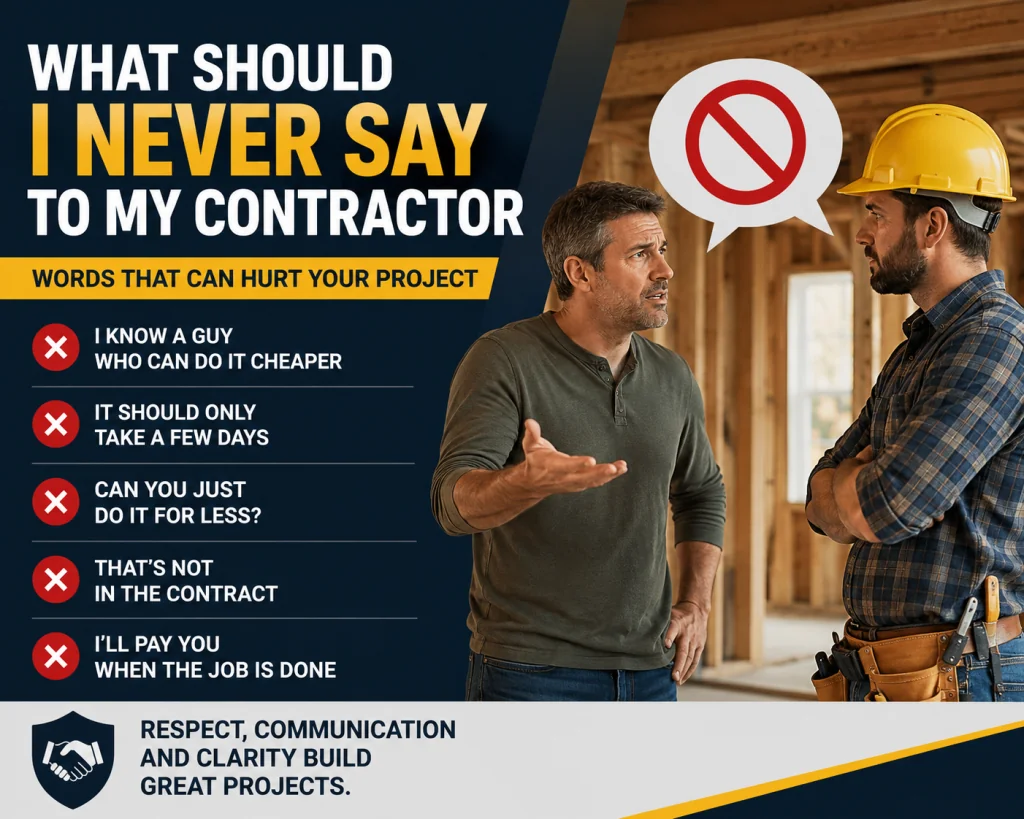
What Should I Never Say to My Contractor?