
What's the Difference Between an Interior Designer and an Interior Architect
What's the Difference Between an Interior Designer and an Interior Architect
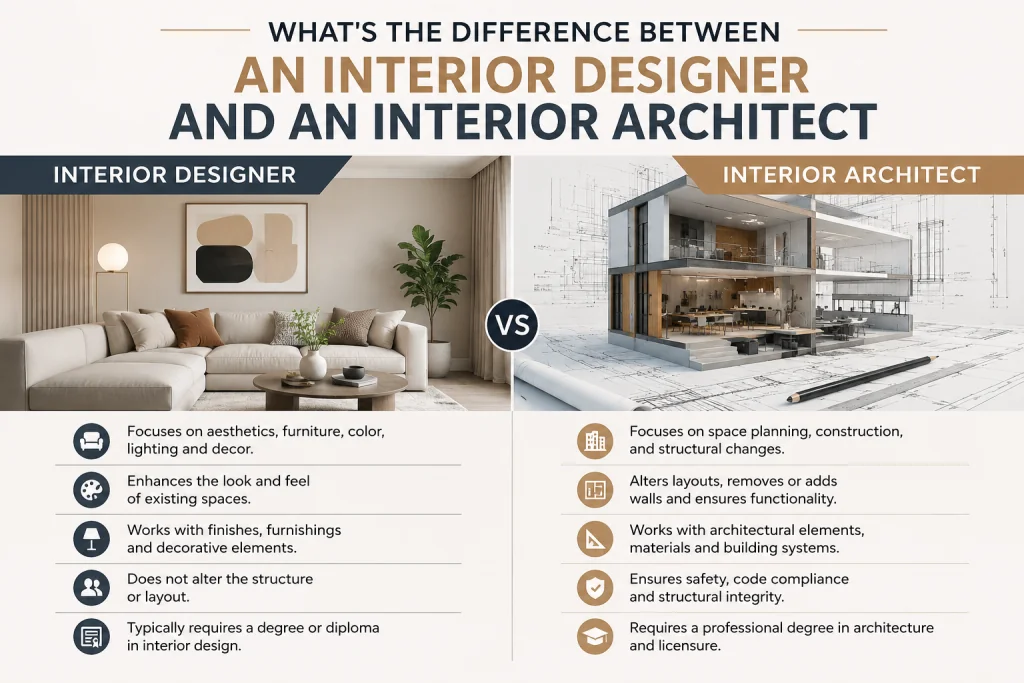
f you’ve spent any time in commercial construction, you’ve likely encountered a moment of confusion on the job site or in the plan room: Are we working with an interior designer or an interior architect?
While the terms are sometimes used interchangeably in casual conversation, they represent two distinct professions with different scopes of work, educational backgrounds, and legal responsibilities. For general contractors, project managers, and developers, understanding the exact difference isn’t just semantic—it’s critical for streamlining permitting, reducing RFIs, preventing change orders, and ensuring seamless project delivery.
Let’s break down the professional roles and responsibilities of interior architects versus interior designers, and what it means for your construction team.
The Interior Architect: Focusing on the "Bones"
Think of the interior architect as the bridge between the core-and-shell architect and the interior finishes. While a traditional architect focuses on the exterior envelope and overall building massing, the interior architect focuses on the structural and spatial integrity of the inside.
Key Responsibilities:
- Structural Alterations: Moving or removing load-bearing walls, modifying floor plates, and altering the physical footprint of the interior space.
- Building Codes & Life Safety: Ensuring the interior layout complies with strict local building codes, fire ratings, egress requirements, and ADA accessibility standards.
- MEP Integration: Coordinating the complex routing of Mechanical, Electrical, and Plumbing systems within the ceiling plenums and floor cavities.
- Adaptive Reuse: Specializing in transforming existing structures (like converting an old warehouse into modern office space) while preserving historical or structural elements.
Education & Licensing:
Interior architects typically hold a professional degree in architecture. In most jurisdictions, if they are altering structural elements or pulling building permits for life-safety systems, they must be a licensed architect.
The Interior Designer: Focusing on the "Experience"
If the interior architect handles the "bones," the interior designer handles the "skin, muscles, and soul" of the space. Interior designers focus on the human experience, optimizing the space for functionality, aesthetics, and the specific needs of the end-user.
Key Responsibilities:
- Space Planning: Optimizing the layout of non-structural elements, workstations, and traffic flow to maximize efficiency and comfort.
- FF&E Selection: Specifying Furniture, Fixtures, and Equipment, including custom millwork, seating, and art.
- Finishes & Materials: Selecting flooring, wall coverings, paint colors, and ceiling treatments that align with the client’s brand and durability requirements.
- Lighting & Acoustics: Designing ambient and task lighting schemes, as well as selecting materials that manage sound and acoustics within the space.
Education & Licensing:
Interior designers usually hold a degree in interior design or interior architecture. Depending on the region, they may hold certifications like the NCIDQ (National Council for Interior Design Qualification) in the US. While they do not typically stamp structural drawings, licensed interior designers can pull permits for non-structural finishes and life-safety updates in many jurisdictions.
The Overlap: Where the Two Roles Converge
It is important to note that these roles are not mutually exclusive; they are highly collaborative. In many modern construction projects, especially large-scale commercial builds, both professionals are on the team.
They overlap in areas like space planning and material selection. An interior architect might dictate the structural grid and core locations, while the interior designer fills that grid with functional workspaces and beautiful finishes. Both professionals must understand building codes, but they apply them to different aspects of the build.
Why This Matters to the Construction Industry
Understanding who is doing what directly impacts the bottom line and schedule of your construction projects. Here is why clarifying these roles matters to your team:
1. Streamlining the Permitting Process
Knowing whether your project requires a licensed architect’s stamp for structural changes, or if it can be permitted by a certified interior designer for cosmetic updates, will dictate your pre-construction timeline. Submitting the wrong documents to the local building department will result in immediate delays.
2. Managing RFIs and Submittals
When a subcontractor encounters a clash between an HVAC duct and a custom lighting fixture, who do you call? If it’s a structural or core MEP issue, it’s an interior architect question. If it’s about the aesthetic placement of the fixture and finish coordination, it’s an interior designer question. Directing RFIs to the right professional saves days of waiting.
3. Accurate Bidding and Scopes of Work
When putting a project out to bid, clearly defining the design team’s structure ensures your estimators know exactly what is included in the drawings. It prevents the "I thought the designer was handling that millwork coordination" excuses during the build phase.
4. Navigating Adaptive Reuse Projects
If you are bidding on a tenant improvement (TI) or adaptive reuse project, the interior architect will be your primary point of contact for existing condition assessments and structural modifications, while the designer will handle the client-facing aesthetic vision.
Both interior architects and interior designers are vital to the success of a construction project. The interior architect ensures the space is safe, legal, and structurally sound, while the interior designer ensures the space is beautiful, functional, and aligned with the client's vision.
By clarifying these professional roles early in the preconstruction phase, construction teams can foster better collaboration, reduce administrative friction, and deliver a higher quality project on time and on budget.
Found this article valuable?
Share it with fellow builders, architects, or download the QR code.
Written by Shanmugam2026
Verified CreatorARQONZ Editorial Team brings you expert insights, construction guides, and architectural design trends from across the building industry.
Related Articles in Construction

What Should I Never Say to My Contractor?