When Do Construction Companies Stop Hiring New Workers?
When Do Construction Companies Stop Hiring New Workers?
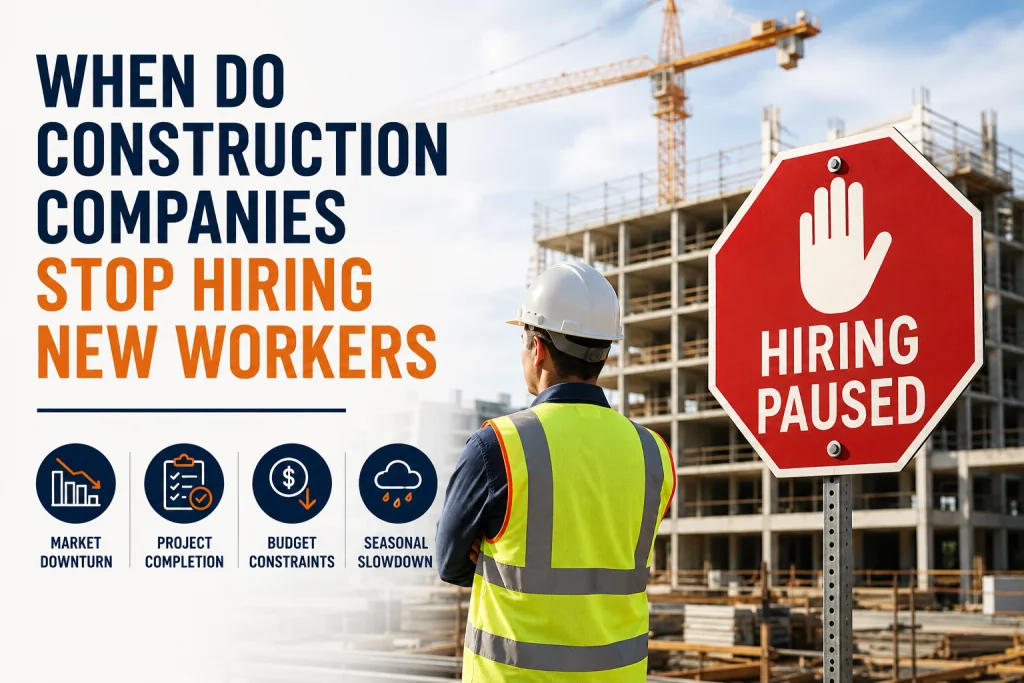
If you work in or manage a construction business, you are intimately familiar with the rhythm of the industry. The spring and summer months bring a flurry of activity, booming job sites, and aggressive recruitment. But as the leaves fall and the temperature drops, a common question arises among both job seekers and project managers: When do construction companies actually stop hiring new workers?
The short answer is that in modern construction, companies rarely execute a hard "stop" on hiring. However, they do undergo significant seasonal employment changes. Understanding the nuances of these hiring cycles is crucial for workforce planning, career navigation, and maintaining a competitive edge in the built environment sector.
Here is a deep dive into the seasonal hiring shifts in construction, why they happen, and how both employers and workers can adapt.
The Myth of the "Hiring Freeze"
Historically, construction was viewed as a strictly seasonal industry. When the ground froze, work stopped, and workers were laid off until the spring thaw. Today, while weather still dictates the pace of work, the industry has evolved.
Rather than a complete halt in hiring, companies experience a shift in hiring focus. The transition from peak outdoor construction to off-season indoor and preparatory work means that while field labor hiring may slow down, other sectors of the workforce remain in high demand year-round.
The Seasonal Hiring Timeline
To understand when hiring slows down, it helps to look at the traditional construction calendar:
1. Spring and Summer (Peak Hiring: March – August)
This is the season of ground-up construction, heavy civil work, and exterior framing. Companies are aggressively hiring general laborers, heavy equipment operators, concrete finishers, and roofers. The focus is on maximizing daylight and favorable weather to meet project milestones.
2. Early Fall (The Transition: September – October)
As autumn sets in, the focus shifts. Exterior work is pushed to completion, and the "drying-in" of buildings becomes the priority. Hiring for exterior trades begins to taper off, while demand for interior trades (drywall, framing, MEP rough-ins) remains high.
3. Late Fall and Winter (The Slowdown: November – February)
This is when traditional field hiring largely stops or slows to a crawl. In regions with harsh winters, pouring concrete and excavation become impossible or prohibitively expensive. Companies stop hiring outdoor field labor and shift their focus to finishing interiors, pre-construction planning, and equipment maintenance.
Note: Regional variations play a massive role here. A commercial builder in South Florida or Southern California will hire field workers at a steady clip year-round, while a civil contractor in Minnesota will see field hiring drop to near zero by late November.
What Drives Seasonal Employment Changes?
Several critical factors dictate when a construction company will pause or shift its hiring efforts:
- Weather and Daylight: The most obvious factor. Frozen ground, snow, and extreme cold halt earthwork and concrete pouring. Reduced daylight hours also limit the productive time on site, reducing the need for large field crews.
- Project Cycles and Deadlines: Many commercial and institutional projects have strict "substantial completion" deadlines tied to the academic calendar (for schools) or the calendar year (for corporate offices). Once these exterior deadlines are met, the need for large outdoor crews vanishes.
- Fiscal Year Budgets: In late Q4 (November/December), many corporate clients and government entities are finalizing their annual budgets. Until new fiscal year budgets are approved in Q1, new project bids—and the subsequent hiring for those projects—often stall.
Where the Jobs Go: The Off-Season Hiring Shift
When a construction company stops hiring for the field, where does the workforce go? Smart companies use the off-season to reallocate resources. Hiring and internal shifts focus on:
- Interior and MEP Trades: Mechanical, Electrical, and Plumbing (MEP) contractors, as well as drywall, painting, and flooring specialists, are in high demand during the winter as buildings are enclosed and climate-controlled.
- Pre-Construction and Estimating: The winter slowdown is the best time to bid on the upcoming spring projects. Companies hire and utilize estimators, schedulers, and BIM (Building Information Modeling) coordinators during the off-season.
- Tenant Improvements (TI) and Renovations: While ground-up construction slows, indoor retail renovations, office remodels, and facility maintenance continue year-round.
- Equipment Maintenance: Heavy equipment mechanics and fleet managers are highly active in the winter, repairing and servicing machinery that was running 24/7 during the summer.
Strategic Takeaways for the Industry
Understanding these seasonal employment changes allows both workers and companies to strategize effectively.
For Job Seekers and Field Workers:
- Upskill in the Off-Season: Use the winter months to obtain certifications (OSHA, OSHA 30, CDL, specialized welding, or BIM software training).
- Pivot to Indoor Trades: If you want year-round employment, consider cross-training in interior finishes or MEP systems.
- Network in the Fall: Build relationships with project managers and superintendents in September and October so you are at the top of their list when spring hiring kicks off.
For Construction Employers:
- Retain Core Talent: Instead of laying off your best workers in the winter, use the slow season for cross-training, safety refreshers, and equipment maintenance. This prevents the costly "spring scramble" to find skilled labor.
- Diversify Your Portfolio: If your company only does heavy civil or exterior work, your revenue and hiring will always be seasonal. Consider expanding into design-build, facility maintenance, or indoor renovations to stabilize your workforce year-round.
- Plan Pre-Construction Hiring: Shift your recruitment focus in Q4 toward office-based roles, estimators, and project managers to prepare for the spring rush.
Construction companies don't necessarily stop hiring new workers; they simply change the type of workers they need based on the season. By recognizing the shift from peak outdoor field labor in the summer to indoor, pre-construction, and maintenance roles in the winter, industry professionals can navigate the cyclical nature of the business with confidence
Found this article valuable?
Share it with fellow builders, architects, or download the QR code.
Written by Shanmugam2026
Verified CreatorARQONZ Editorial Team brings you expert insights, construction guides, and architectural design trends from across the building industry.
Related Articles in Construction

What Should I Never Say to My Contractor?