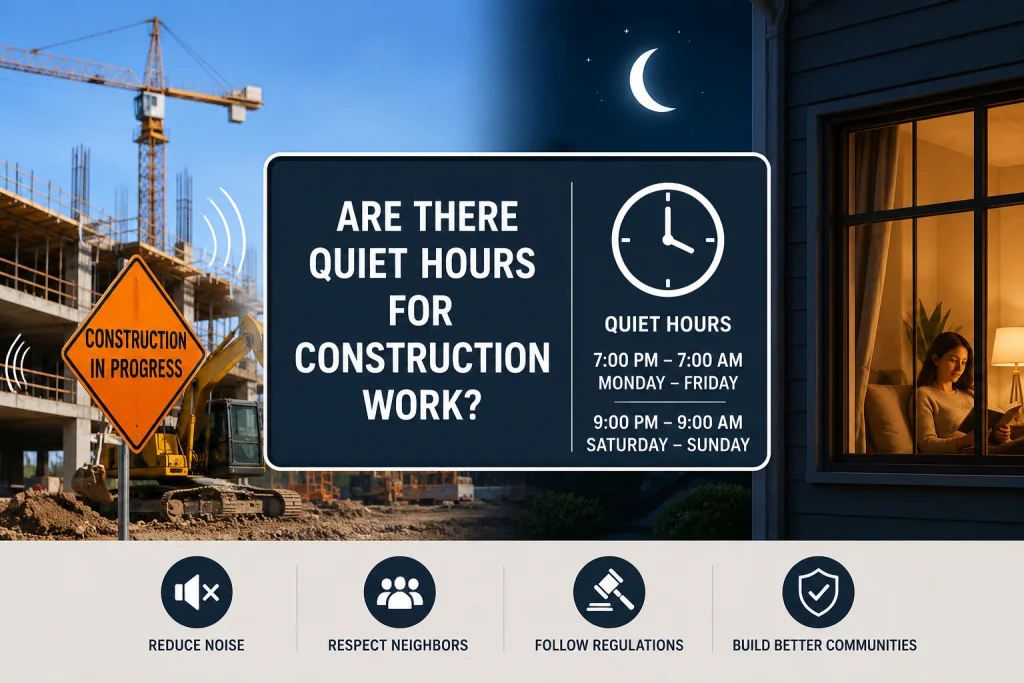
When Does Construction Have to Stop Each Day?
When Does Construction Have to Stop Each Day?

In the construction industry, the old adage "time is money" has never been truer. Project managers and contractors are constantly looking for ways to maximize productivity, keep crews moving, and hit milestone deadlines. However, there is a hard line where productivity must yield to compliance, safety, and community relations: the end-of-day cutoff time.
Knowing exactly when construction has to stop each day isn’t just about watching the sun go down. It involves navigating a complex web of local regulations, safety protocols, and site security measures.
Whether you are a general contractor managing a multi-family build or a subcontractor overseeing a residential remodel, understanding end-of-day cutoff times is critical to keeping your project on schedule and out of legal trouble. Here is everything you need to know about when the tools need to be put away.
1. The Legal Cutoff: Noise Ordinances and Municipal Codes
The most rigid end-of-day cutoff is dictated by local municipal codes and noise ordinances. While regulations vary wildly from city to city, there are general industry standards you must be aware of.
- Standard Weekday Hours: In most municipalities, permitted construction hours are typically 7:00 AM to 6:00 PM or 7:00 PM, Monday through Friday.
- Weekend and Holiday Restrictions: Many jurisdictions severely restrict or entirely ban noise-generating construction on Saturdays, Sundays, and federal holidays. If weekend work is allowed, it often starts later (e.g., 8:00 AM or 9:00 AM) and ends earlier.
- Residential vs. Commercial: Commercial and industrial zones often have more lenient hours, and some urban commercial sites are permitted to work 24/7. Residential zones, however, are strictly enforced to protect the peace of the community.
Pro Tip: Never assume the rules are the same in the next town over. Always verify the specific noise ordinances and permitted hours with the local building department before mobilizing a crew.
2. The Nuance: "Loud" vs. "Quiet" Work Cutoffs
A common misconception is that all work must stop at the cutoff time. In reality, many municipalities differentiate between noise-generating activities and quiet activities.
- High-Noise Cutoff (e.g., 6:00 PM): Heavy equipment operation, demolition, concrete pouring, and power tool usage usually must cease at the strict legal cutoff.
- Low-Noise/No-Noise Extensions: Tasks like interior painting, drywall taping, electrical wiring, or manual cleanup may be permitted to continue for an hour or two past the noise cutoff, provided they do not disturb the neighbors.
Note: You must explicitly check if your local permit allows for "quiet work" extensions. If it doesn't, all personnel must vacate the site at the official cutoff.
3. The Safety Cutoff: Lighting and Crew Fatigue
Even if your local laws allow you to work until 9:00 PM, you must consider the safety cutoff. As daylight fades, construction sites become inherently more dangerous.
- Illumination Requirements: If you are working past dusk, OSHA (or your local equivalent) requires adequate temporary lighting. Setting up, maintaining, and powering temporary light towers takes time and resources.
- Crew Fatigue: Construction is physically demanding. Working late into the evening increases the risk of accidents due to fatigue, reduced visibility, and dropping core body temperatures.
- The "Safe Stop" Rule: Many reputable firms institute an internal safety cutoff that is 30 to 60 minutes before the legal cutoff or sunset. This ensures crews have ample daylight to safely shut down equipment, clean their work areas, and exit the site without rushing.
4. The Security Cutoff: Securing the Site
The end of the workday isn't just about stopping work; it’s about transitioning the site into a secure state. The "security cutoff" requires time management. You cannot wait until the exact minute of the legal cutoff to start securing the site.
Before the final crew leaves, the site supervisor must ensure:
- All heavy equipment is powered down, keys removed, and parked in designated, secure areas.
- Trenches and excavations are properly barricaded and covered.
- Hazardous materials and chemicals are locked in secure storage.
- Tools are locked in gang boxes or the site trailer to prevent theft.
- The site is swept for fire hazards (e.g., ensuring no hot work is left unattended).
Factoring in 30 to 45 minutes for end-of-day site security is crucial for liability protection and preventing overnight theft or vandalism.
5. How to Maximize Productivity Within the Cutoff
Knowing when you have to stop is only half the battle; the real skill lies in optimizing the hours you have. Here is how top contractors maximize the daylight:
- Strategic Task Sequencing: Schedule your loudest, most disruptive, and most critical path tasks for the middle of the day. Save material staging, prep work, or quiet tasks for the early morning or late afternoon.
- Staggered Shifts: If local laws permit, consider utilizing staggered shifts. Have an early crew start at 6:00 AM to do demolition, and a late crew finish at 8:00 PM doing quiet interior work.
- Pre-Fabrication: Move as much work off-site as possible. Prefabricating materials in a controlled warehouse environment bypasses local noise ordinances and weather delays entirely.
What If You Need More Time?
If a critical path delay has pushed your schedule, and you absolutely must work past the legal cutoff, you cannot simply break the law. Instead, you must apply for a variance or an after-hours permit.
Be prepared to:
- Submit a formal request to the local building or code enforcement department well in advance.
- Detail exactly what work will be done and why it cannot be done during standard hours.
- Outline your noise mitigation strategy (e.g., using sound blankets, restricting work to the interior of the building).
- Proactively communicate with the neighbors. A little courtesy goes a long way in preventing the noise complaints that trigger code enforcement visits.
End-of-day cutoff times are not just suggestions; they are the boundary lines between a well-managed, professional job site and a liability nightmare. By understanding local noise ordinances, prioritizing safety and site security, and strategically sequencing your daily tasks, you can keep your project moving forward without crossing the line.
Respect the clock, protect your crew, and maintain good standing with the community. When the sun goes down and the cutoff time hits, a secure, compliant site is the best foundation for a productive tomorrow.
Found this article valuable?
Share it with fellow builders, architects, or download the QR code.
Written by Shanmugam2026
Verified CreatorARQONZ Editorial Team brings you expert insights, construction guides, and architectural design trends from across the building industry.
Related Articles in Construction

What Should I Never Say to My Contractor?