
Which Eco-Friendly Insulation Options Are Best?
Which Eco-Friendly Insulation Options Are Best?
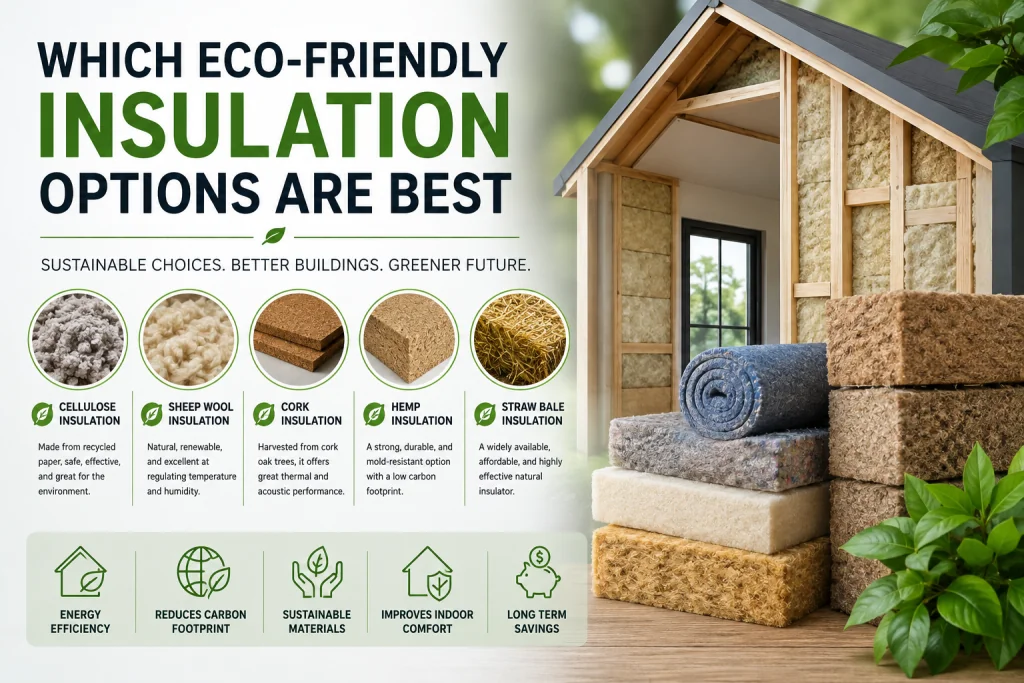
Introduction
As the construction industry continues to prioritize sustainability and energy efficiency, selecting the right eco-friendly insulation has become critical for builders, architects, and contractors. With building codes tightening and client demand for green construction growing, understanding which sustainable insulation options deliver the best performance is essential for staying competitive in 2026.
This comprehensive guide compares the top eco-friendly insulation materials, providing construction professionals with the data needed to make informed specifications that balance environmental responsibility, thermal performance, and project budgets.
Why Eco-Friendly Insulation Matters
The construction sector accounts for a significant portion of global carbon emissions, making material selection crucial for reducing environmental impact. Eco-friendly insulation options offer multiple advantages:
- Lower embodied carbon compared to traditional synthetic materials
- Renewable or recycled content that diverts waste from landfills
- Improved indoor air quality with reduced toxic off-gassing
- Superior breathability that prevents moisture issues
- Comparable or better thermal performance than conventional options www.tradedesignbuild.com
Top Eco-Friendly Insulation Options Compared
1. Cellulose Insulation
Composition: 75-85% recycled paper (primarily newsprint) with fire-retardant additives
R-Value: 3.5 - 3.8 per inch
www.rmax.com
Cost: $0.50-$1.00 per square foot
leyton.com
Best Applications:
- Attic blow-in applications
- Wall cavities (dense-pack)
- Retrofit projects
Pros:
- Highest recycled content of any insulation type
- Excellent soundproofing capabilities
- Cost-effective solution for large areas
- Superior air sealing when densely packed
- Fire-resistant treatment included
Cons:
- Can settle over time if not properly installed
- Requires professional installation equipment
- Moisture sensitivity requires vapor barriers
Professional Recommendation: Cellulose remains one of the most eco-friendly insulation options available, making it ideal for budget-conscious projects with strong sustainability goals
quietdeniminsulation.com.
2. Sheep's Wool Insulation
Composition: Natural sheep's wool fibers, often with minimal treatment
R-Value: 3.0 - 4.0 per inch
www.rmax.com
Cost: $1.50-$3.00 per square foot
Best Applications:
- Interior wall cavities
- Roof insulation
- Historic building retrofits
- High-humidity climates
Pros:
- Naturally moisture-regulating (absorbs up to 33% of its weight without losing R-value)
- Renewable and biodegradable
- Excellent indoor air quality (naturally filters pollutants)
- Easy to handle and install
- Long lifespan (60+ years)
Cons:
- Higher upfront cost
- Limited availability in some regions
- May require pest treatment in certain areas
Professional Recommendation: Sheep's wool excels in moisture-prone applications and is particularly valuable in historic preservation projects where breathability is critical
pricewiseinsulation.com.au.
3. Hemp Insulation
Composition: Hemp fibers (80-92% hemp) with polyester binding
R-Value: 3.5 - 4.0 per inch
Cost: $1.25-$2.50 per square foot
Best Applications:
- New construction wall systems
- Timber frame buildings
- Sustainable residential projects
Pros:
- Rapidly renewable resource (hemp grows in 3-4 months)
- Carbon-negative material (sequesters CO2 during growth)
- Natural pest and mold resistance
- Excellent thermal mass properties
- Safe installation (no protective equipment required)
Cons:
- Limited manufacturing capacity in North America
- Higher cost than cellulose or fiberglass
- Requires specific framing considerations
Professional Recommendation: Hemp batts offer exceptional performance for new construction projects where sustainability certifications (LEED, Living Building Challenge) are priorities
www.tradedesignbuild.com.
4. Recycled Denim (Cotton) Insulation
Composition: 80-85% post-consumer recycled denim and cotton fibers
R-Value: 3.2 - 3.7 per inch
thermtest.com
Cost: $1.00-$2.00 per square foot
Best Applications:
- Interior partitions
- Sound-critical spaces (studios, theaters)
- DIY-friendly residential projects
Pros:
- Made from diverted textile waste
- Zero VOC emissions
- No itching or respiratory irritation during installation
- Superior acoustic performance
- Can be reused or recycled at end-of-life
Cons:
- Lower R-value per inch than some alternatives
- Higher cost than fiberglass
- Limited structural rigidity
- Can absorb moisture if not properly protected
Professional Recommendation: Denim insulation is ideal for interior applications where sound control and installer safety are priorities, particularly in occupied renovation scenarios
inhabitat.com.
5. Wood Fiber Insulation
Composition: Sustainably harvested wood fibers (often from sawmill waste)
R-Value: 3.5 - 4.0 per inch
Cost: $1.50-$3.50 per square foot
Best Applications:
- Exterior continuous insulation (ci)
- Roof deck insulation
- Passive House construction
Pros:
- Excellent vapor permeability
- High thermal mass for temperature regulation
- Rigid boards provide structural benefits
- Carbon sequestration from sustainably managed forests
- Superior summer heat protection
Cons:
- Premium pricing
- Heavier than synthetic alternatives
- Requires careful moisture management during construction
- Limited domestic production
Professional Recommendation: Wood fiber boards excel in exterior insulation applications and are particularly valuable in Passive House and net-zero energy projects
2050-materials.com.
6. Aerogel Insulation
Composition: Silica-based nanostructure (99.8% air)
R-Value: 10.0 - 30.0 per inch (highest of any insulation)
Cost: $10.00-$25.00 per square foot
Best Applications:
- Space-constrained applications
- Historic preservation (thin profile)
- High-performance building envelopes
- Industrial applications
Pros:
- Highest R-value per inch available
- Extremely thin profile
- Hydrophobic properties
- Fire-resistant
- Long-term performance stability
Cons:
- Premium cost limits widespread adoption
- Brittle material requires careful handling
- Higher embodied energy in manufacturing
- Limited availability
Professional Recommendation: While expensive, aerogel is unmatched for applications where space is at a premium or where maximum thermal performance is required in minimal thickness
www.rmax.com.
7. Soy-Based Spray Foam
Composition: 20-40% soybean oil, remaining polyol components
R-Value: 3.5 - 4.0 per inch (open-cell), 6.0 - 7.0 per inch (closed-cell)
Cost: $1.50-$4.00 per square foot
Best Applications:
- Irregular cavity filling
- Air sealing critical areas
- Rim joists and band joists
- Cathedral ceilings
Pros:
- Renewable bio-based content
- Superior air sealing performance
- High R-value (closed-cell)
- Moisture barrier properties (closed-cell)
- Expands to fill gaps and cracks
Cons:
- Professional installation required
- Higher cost than batt insulation
- Some formulations still contain petrochemicals
- Off-gassing during installation
Professional Recommendation: Soy-based spray foam provides excellent air sealing for building envelope continuity, making it valuable for meeting stringent energy codes
www.usgbc.org.
Quick Comparison Chart
| Material | R-Value/Inch | Cost/SF | Recycled/Renewable | Best For |
|---|---|---|---|---|
| Cellulose | 3.5-3.8 | $0.50-$1.00 | 80% recycled | Attics, retrofits |
| Sheep's Wool | 3.0-4.0 | $1.50-$3.00 | 100% renewable | Moisture-prone areas |
| Hemp | 3.5-4.0 | $1.25-$2.50 | 100% renewable | New construction |
| Recycled Denim | 3.2-3.7 | $1.00-$2.00 | 85% recycled | Interior, sound control |
| Wood Fiber | 3.5-4.0 | $1.50-$3.50 | 100% renewable | Exterior CI, Passive House |
| Aerogel | 10.0-30.0 | $10.00-$25.00 | Synthetic | Space-constrained |
| Soy Spray Foam | 3.5-7.0 | $1.50-$4.00 | 20-40% bio-based | Air sealing |
Selection Criteria for Construction Professionals
When specifying eco-friendly insulation, consider these key factors:
1. Climate Zone Requirements
Match insulation type and R-value to IECC climate zone specifications. Higher R-values may be needed in extreme climates
www.energystar.gov.
2. Building Assembly Type
- Walls: Hemp, wood fiber, or dense-pack cellulose
- Attics: Blown cellulose or sheep's wool
- Foundations: Closed-cell spray foam or rigid wood fiber
- Roofs: Wood fiber boards or sheep's wool
3. Moisture Management
In high-humidity climates or moisture-prone assemblies, prioritize vapor-permeable materials like wood fiber, hemp, or sheep's wool that allow drying
www.tradedesignbuild.com.
4. Fire Code Compliance
Verify that selected materials meet local fire codes. Most natural insulations include fire retardants, but documentation is essential for inspections.
5. Installation Expertise
Consider local contractor familiarity with materials. Cellulose and spray foam require specialized equipment, while batts (hemp, wool, denim) are more DIY-friendly.
6. Sustainability Certifications
For LEED, Living Building Challenge, or Passive House projects, verify third-party certifications:
- Cradle to Cradle Certified
- GREENGUARD Gold
- Declare Label
- EPD (Environmental Product Declaration)
Cost-Benefit Analysis
While eco-friendly insulation often carries a premium of 10-50% over conventional fiberglass, the long-term value proposition is compelling:
Energy Savings: Superior air sealing and thermal performance can reduce heating/cooling costs by 20-40% annually
Durability: Natural materials often outlast synthetics, with 50-100 year lifespans vs. 20-30 years for some foams
Health Benefits: Reduced VOC exposure and improved indoor air quality have measurable productivity and health impacts
Resale Value: Green certifications and energy efficiency increasingly command premium property values
Regulatory Future-Proofing: Stricter energy codes make high-performance insulation a smart long-term investment
Top Product Recommendations for 2026
Best Overall Value: Cellulose
Product: Greenfiber Blown-In Cellulose
- 85% recycled content
- EPA Design for the Environment certified
- Excellent for production housing and retrofits www.greenfiber.com
Best for High Performance: Wood Fiber
Product: STEICO Wood Fiber Boards
- FSC-certified sustainable forestry
- Ideal for exterior continuous insulation
- Passive House Institute certified 2050-materials.com
Best for Moisture Management: Sheep's Wool
Product: Thermafleece Wool Insulation
- UK-made with traceable wool sources
- Naturally regulates humidity
- Excellent for historic buildings 2050-materials.com
Best for Sound Control: Recycled Denim
Product: UltraTouch Denim Insulation
- 80% post-consumer recycled content
- NRC rating of 0.95+ for acoustics
- Safe for occupied renovations
Best for Air Sealing: Soy Spray Foam
Product: EcoBay Soy-Based SPF
- 30% bio-based content
- Superior air barrier performance
- Meets stringent energy codes
Installation Best Practices
Regardless of material selection, proper installation is critical for performance:
- Air Sealing First: Address air leaks before installing insulation
- Continuous Coverage: Eliminate thermal bridging with continuous insulation strategies
- Vapor Control: Install appropriate vapor barriers/retarders for climate zone
- Quality Assurance: Use thermal imaging to verify complete coverage
- Documentation: Maintain records for green building certifications
The "best" eco-friendly insulation depends on your specific project requirements, budget, and performance goals. However, clear leaders emerge for different applications:
For Budget-Conscious Projects: Cellulose delivers exceptional environmental performance at the lowest cost
For Maximum Sustainability: Hemp and wood fiber offer carbon-negative performance with excellent thermal properties
For Moisture-Prone Applications: Sheep's wool provides unmatched humidity regulation
For Space Constraints: Aerogel delivers maximum R-value in minimal thickness
For Air Sealing: Soy-based spray foam combines renewable content with superior envelope performance
As construction professionals, our responsibility extends beyond code minimums. By specifying eco-friendly insulation materials, we reduce embodied carbon, improve occupant health, and future-proof buildings against increasingly stringent energy requirements. The products and strategies outlined in this guide provide a roadmap for sustainable insulation specification in 2026 and beyond.
Found this article valuable?
Share it with fellow builders, architects, or download the QR code.
Written by Shanmugam2026
Verified CreatorARQONZ Editorial Team brings you expert insights, construction guides, and architectural design trends from across the building industry.
Related Articles in Construction

What Should I Never Say to My Contractor?