Why Are Good Contractors Expensive?
Why Are Good Contractors Expensive?
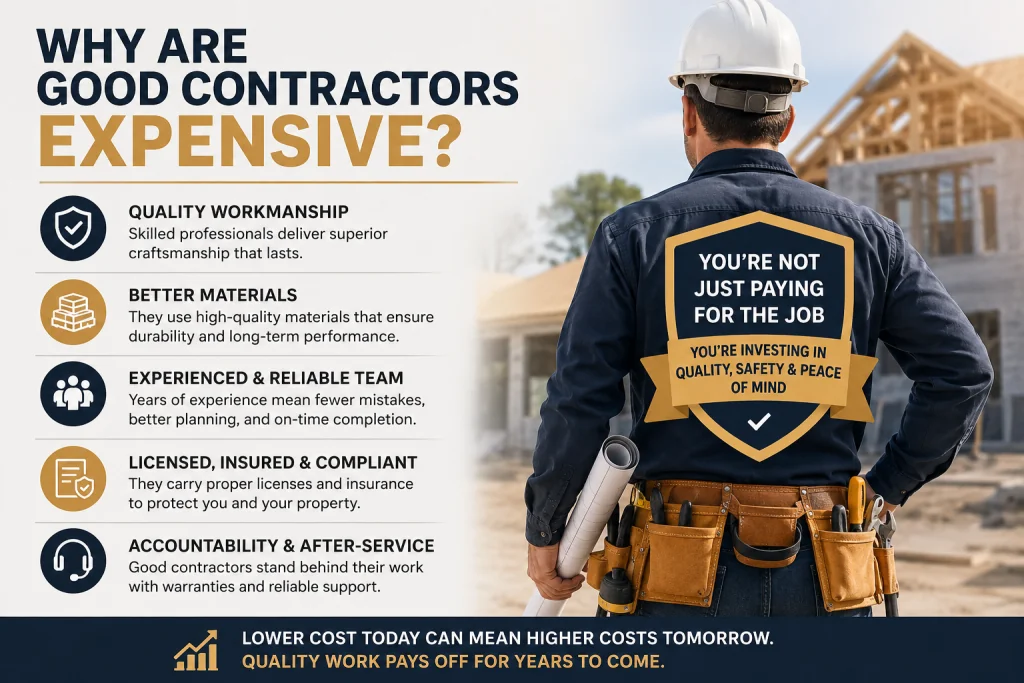
If you have ever opened a contractor’s bid and felt a sudden drop in your stomach, you are not alone. "Sticker shock" is a universal experience in the construction industry. When comparing quotes, it is incredibly tempting to go with the lowest number. But in construction, the lowest bid rarely equates to the best value.
So, why do top-tier contractors seem so expensive? The truth is, they aren't just charging more for the sake of higher profits. They are pricing in reliability, risk mitigation, and long-term quality.
Let’s pull back the curtain on construction pricing and explore what you are actually paying for when you hire a high-quality contractor.
The Anatomy of a Contractor’s Quote
To understand pricing, we first need to understand where the money goes. A professional contractor’s estimate is not just a guess; it is a meticulously calculated projection of costs. A standard bid is broken down into four main categories:
1. Direct Costs (Materials and Subcontractors)
This is the most visible part of the budget. It includes the physical materials (lumber, concrete, steel, fixtures) and the specialized subcontractors (plumbers, electricians, HVAC). Good contractors do not buy the cheapest materials; they buy materials that meet code, offer durability, and come with manufacturer warranties.
2. Labor
Skilled labor is the backbone of any construction project. In today’s market, experienced tradespeople command premium wages. A high-quality contractor pays their crews fairly, provides ongoing training, and invests in their safety. This ensures the work is done right the first time, but it inherently drives up labor costs.
3. Overhead and General Conditions
This is the "invisible" cost that cheap contractors often omit. Overhead includes the costs of running the business: office rent, software, estimating time, project management, vehicle maintenance, and equipment depreciation. Furthermore, "General Conditions" cover site security, temporary utilities, dumpsters, and site supervision.
4. Insurance, Bonds, and Licenses
This is perhaps the most critical differentiator. A reputable contractor carries comprehensive General Liability insurance, Workers' Compensation, and surety bonds. These protections are expensive, but they ensure that if an accident occurs on your property, or if a worker is injured, you are not held financially liable.
5. Profit Margin
Finally, there is the profit margin. This is not "greed"; it is the financial buffer that allows a company to survive unforeseen issues, honor their warranties, and stay in business long enough to fix a problem if one arises three years down the line.
The "Cheap Bid" Illusion: What You Sacrifice
When a bid comes in significantly lower than the rest of the pack, it is usually a red flag. In construction, the math has to work. If a contractor is bidding 20% lower than the market average, they are likely cutting corners in areas you cannot easily see:
- Underinsuring or Operating "Off the Books": If an uninsured worker falls off a roof on your property, your homeowner’s or business insurance could be on the hook for hundreds of thousands of dollars in medical and liability claims.
- Value Engineering the Wrong Things: They may be substituting specified, high-quality materials with cheap alternatives that will fail prematurely.
- Unskilled Labor: They may be using untrained, day-labor crews who make mistakes that will cost you thousands in rework later.
- No Project Management: The contractor may be a "guy with a truck" who lacks the organizational skills to sequence the project properly, leading to massive delays.
What You Are Actually Paying For: The Value of Quality
When you hire a premium contractor, you are shifting your expenditure from a cost to an investment. Here is what that investment buys you:
1. Predictability and Peace of Mind
Good contractors are master project managers. They anticipate supply chain delays, weather disruptions, and design clashes before they happen. You are paying for a smooth process, clear communication, and the peace of mind that comes from knowing your project is in capable hands.
2. Strict Adherence to Schedule
In commercial construction and large residential builds, time is literally money. Delays mean lost revenue, extended carrying costs, and frustrated stakeholders. A good contractor has the manpower, the subcontractor relationships, and the management skills to finish the job on time.
3. Risk Mitigation and Compliance
Building codes and OSHA regulations are complex and constantly changing. A quality contractor ensures your project passes all inspections the first time. They absorb the risk of regulatory compliance so you don't have to worry about fines, stop-work orders, or failed inspections.
4. Accountability and Warranties
A fly-by-night operator will disappear when a leak develops six months after completion. A reputable contractor stands behind their work. Their profit margin ensures they have the financial stability to honor their 1-year (or longer) workmanship warranties.
How to Evaluate Bids Like a Pro
Instead of just looking at the bottom line, evaluate your bids based on the total value offered. When reviewing proposals, ask yourself:
- Is the Scope of Work identical? Are they bidding on the exact same materials and specifications? (An apples-to-apples comparison is vital).
- Are they fully insured? Ask for a Certificate of Insurance (COI) naming you as the additional insured.
- What is their communication plan? How often will you receive updates, and who is your single point of contact?
- What is their safety record? Ask for their EMR (Experience Modification Rate). A low EMR indicates a strong safety culture, which reduces the risk of on-site accidents.
Good contractors aren't expensive; cheap contractors are. When you factor in the hidden costs of rework, delays, liability, and stress, the lowest bidder almost always ends up costing you more in the long run.
By understanding the mechanics of construction pricing, you can make an informed decision. Choose a partner who prices their work transparently, invests in their people, and values the quality of the final build. In construction, you truly get what you pay for.
Found this article valuable?
Share it with fellow builders, architects, or download the QR code.
Written by Shanmugam2026
Verified CreatorARQONZ Editorial Team brings you expert insights, construction guides, and architectural design trends from across the building industry.
Related Articles in Construction
What Should I Never Say to My Contractor?