Why Does Construction Start So Early in the Morning?
Why Does Construction Start So Early in the Morning?

If you’ve ever been awakened by the distant hum of a diesel engine or the rhythmic tapping of a jackhammer at 6:00 AM, you’ve likely asked yourself: Why does construction have to start so early?
While it might seem like an arbitrary choice to disrupt the morning peace, early start times on construction sites are actually the result of meticulous project planning. In the construction industry, time is quite literally money, but it is also inextricably linked to safety, material integrity, and logistical efficiency.
For project owners, stakeholders, and industry professionals, understanding the rationale behind these dawn patrols is key to appreciating the complexities of modern construction management. Here is a professional breakdown of why construction projects kick off before the sun is fully up.
1. Beating the Heat: Protecting Materials and Workers
In many regions, particularly during the spring and summer months, midday temperatures can soar. Starting early allows crews to complete the most physically demanding tasks during the coolest part of the day.
More importantly, temperature control is critical for material integrity. Concrete pouring and curing, for example, are highly sensitive to heat. If concrete is placed in extreme midday temperatures, it can cure too quickly, leading to thermal cracking and compromised structural strength. By starting early, crews can pour and finish concrete before the peak heat sets in, ensuring a higher quality build. Furthermore, mitigating heat stress is a top priority for jobsite safety, reducing the risk of heat exhaustion among the workforce.
2. Navigating Traffic and Streamlining Logistics
Construction sites require a massive, continuous flow of materials, heavy equipment, and personnel. Transporting oversized loads, concrete mixer trucks, and flatbed deliveries through dense urban or suburban traffic during rush hour is a logistical nightmare.
By scheduling material deliveries and heavy equipment mobilization for the early morning, project managers can bypass peak traffic congestion. This ensures that materials arrive on time, reducing costly idle time for crews waiting on deliveries. It also minimizes the wear and tear on local infrastructure and reduces the carbon footprint associated with idling in traffic.
3. Maximizing Daylight for Enhanced Safety
Safety is the number one priority on any construction site. Working in low-light conditions or relying solely on temporary artificial lighting increases the risk of accidents, trips, and falls.
By starting at first light, construction teams maximize their use of natural daylight. This provides optimal visibility for operating heavy machinery, reading blueprints, and identifying potential hazards. While modern LED site lighting has improved nighttime visibility, natural daylight remains the gold standard for maintaining a safe, high-precision work environment.
4. Optimizing the Critical Path and Subcontractor Scheduling
Commercial construction is a highly choreographed dance of various trades. The critical path method (CPM) dictates the schedule, and any delay in one trade can cascade and delay the entire project.
Early starts allow general contractors to maximize the working hours in a day. This is especially crucial when coordinating multiple subcontractors. For instance, the framing crew needs to finish their section before the electrical and plumbing teams can move in. By starting early, the primary trades can complete their daily targets, ensuring that the subsequent subcontractors can begin their work on time the following day, keeping the project strictly on schedule.
5. Managing Community Impact and Noise Ordinances
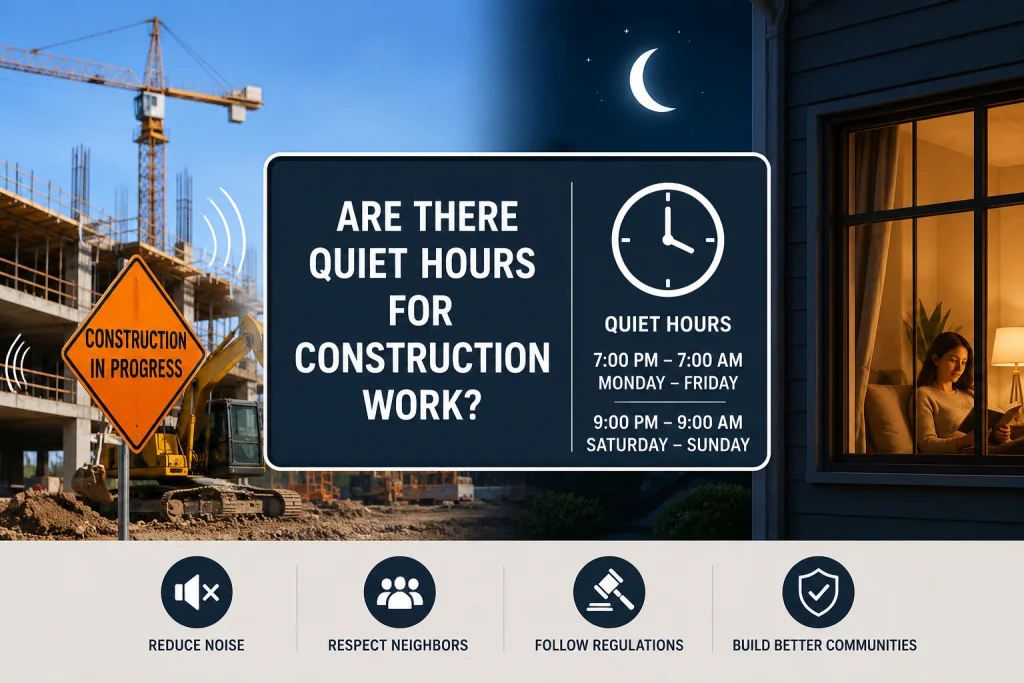
It may seem counterintuitive, but starting early is often a strategic move to reduce overall community disruption. Many municipalities have strict noise ordinances that prohibit heavy construction noise during early evening or nighttime hours.
By starting at 7:00 AM (or earlier, where permitted), crews can complete the most noise-intensive tasks—such as demolition, pile driving, or heavy excavation—well before the evening hours when residents are returning home, relaxing, or putting children to bed. Finishing the loud work earlier in the day allows the site to transition to quieter tasks or wrap up entirely by late afternoon, respecting the surrounding community's evening peace.
The early morning alarm on a construction site isn't just about getting a head start; it is a strategic operational decision. It reflects a project management team’s commitment to delivering a high-quality build, maintaining rigorous safety standards, optimizing logistics, and respecting the surrounding community.
When you see the site lights flicking on at dawn, you aren't just seeing a crew going to work—you are witnessing the proactive execution of a complex, highly coordinated plan designed to deliver your project on time and on budget.
Found this article valuable?
Share it with fellow builders, architects, or download the QR code.
Written by Shanmugam2026
Verified CreatorARQONZ Editorial Team brings you expert insights, construction guides, and architectural design trends from across the building industry.
Related Articles in Construction

What Should I Never Say to My Contractor?