
Why Won't Contractors Take Small Jobs?
Why Won't Contractors Take Small Jobs?

If you are a homeowner, property manager, or real estate investor, you have likely experienced this scenario: You call a reputable general contractor or specialized tradesperson for a minor repair—a drywall patch, a single broken window, or a leaky faucet—and they politely decline the work.
It can be frustrating. After all, if a contractor has the skills to build a custom home or renovate a commercial space, surely they can handle a two-hour fix, right?
To understand this dynamic, we have to look at the construction industry not just as a trade, but as a complex business. The refusal to take on small jobs is rarely about a lack of capability or a desire to be unhelpful. Instead, it is rooted in the harsh economic and operational realities of running a construction business.
Here is a professional look into why contractors turn away minor repairs, and how you can navigate contractor availability to get the work you need done.
The Economics of Construction: Why "Small" Doesn't Mean "Easy"
To a homeowner, a job is small if it takes a few hours and costs a few hundred dollars. To a construction company, a job is only viable if it covers overhead, mitigates risk, and generates a sustainable profit margin. Here is why minor repairs often fail that test:
1. The Mobilization and Overhead Trap
In construction, mobilization—the process of getting a crew, tools, and materials to a job site—costs roughly the same whether the job is $500 or $50,000. A contractor must account for the time spent driving, unloading, setting up safety protocols, and eventually cleaning up. Furthermore, the administrative overhead (estimating, drafting contracts, pulling permits, and invoicing) requires the same amount of office staff time for a minor repair as it does for a major remodel. When the overhead eats up the profit margin, the job becomes a financial loss.
2. Opportunity Cost and Crew Momentum
Construction relies heavily on momentum. When a contractor pulls a three-person crew off a large, profitable project to drive across town and fix a single deck board, they aren't just losing the two hours spent on the repair. They are losing the momentum of the larger crew, disrupting the daily workflow, and delaying the primary project. In an industry where labor is at a premium, time is a contractor’s most valuable asset.
3. Risk vs. Reward and Liability
Contractors carry heavy insurance policies, licensing fees, and warranty obligations. These costs do not scale down with the size of the job. If a contractor makes a minor repair and it subsequently fails, causing water damage to a home, the liability is massive. Taking on a $300 job that carries a potential $30,000 liability claim is a risk most established construction firms simply cannot afford to take.
4. The Dreaded "Scope Creep"
Minor repairs are notorious for turning into major headaches. A contractor is called to fix a small section of rotted siding, only to open up the wall and discover widespread structural decay or mold. Suddenly, a simple repair turns into a complex negotiation, a delayed timeline, and an unhappy client. Many contractors avoid small jobs to avoid the high probability of scope creep and the resulting client friction.
Bridging the Gap: How to Get Minor Repairs Done
Understanding the contractor’s perspective is the first step. The next step is finding a solution that works for your property. If you have minor repairs that need attention, here are the most effective strategies to get them handled professionally:
1. Hire a Handyman or Specialized Repair Service
General Contractors (GCs) are built for large-scale projects. For minor repairs, pivot to a professional handyman service or a specialized "repair and maintenance" company. These businesses have lower overhead, streamlined administrative processes, and business models specifically designed to profit from small-ticket items.
2. Bundle Your Work (Create a "Punch List")
If you want a specific contractor to do the work, do not call them for one isolated task. Instead, compile a list of all the minor repairs, upgrades, and maintenance issues your property needs. By bundling a half-day or full-day's worth of work, you make the mobilization and travel time worth the contractor's while.
3. Establish a Preventative Maintenance Contract
If you manage commercial properties or a portfolio of rentals, consider negotiating an Annual Maintenance Agreement (AMA) with a local contractor. By guaranteeing them a set number of hours per month or year for minor repairs and inspections, you provide them with predictable revenue. In exchange, they will prioritize your minor repair requests.
4. Schedule During "Downtime"
Contractor availability fluctuates with the seasons and the weather. If you have a non-urgent minor repair, ask the contractor if they can schedule it during a known slow period, or use it as a "rain day" task. If a crew cannot work outside due to weather, having them dispatched to your property for interior minor repairs keeps them productive and gets your job done.
5. Be Flexible and Understand the Pricing
If a contractor agrees to take on a small job, understand that their minimum charge will likely reflect their daily operational costs. Paying a premium for a minor repair is the cost of doing business with a highly qualified, insured professional. Accepting their minimum call-out fee without haggling will build goodwill and make them more likely to help you in the future.
The construction industry is built on efficiency, scale, and risk management. When contractors decline small jobs, they are protecting their business operations, their crews, and their bottom line.
By understanding these operational realities, property owners and managers can adjust their expectations and strategies. Whether you choose to hire a specialized handyman, bundle your repair lists, or set up a maintenance contract, aligning your approach with the realities of the construction business will ensure your property stays in top shape—and your relationship with local contractors remains strong.
Found this article valuable?
Share it with fellow builders, architects, or download the QR code.
Written by Shanmugam2026
Verified CreatorARQONZ Editorial Team brings you expert insights, construction guides, and architectural design trends from across the building industry.
Related Articles in Construction
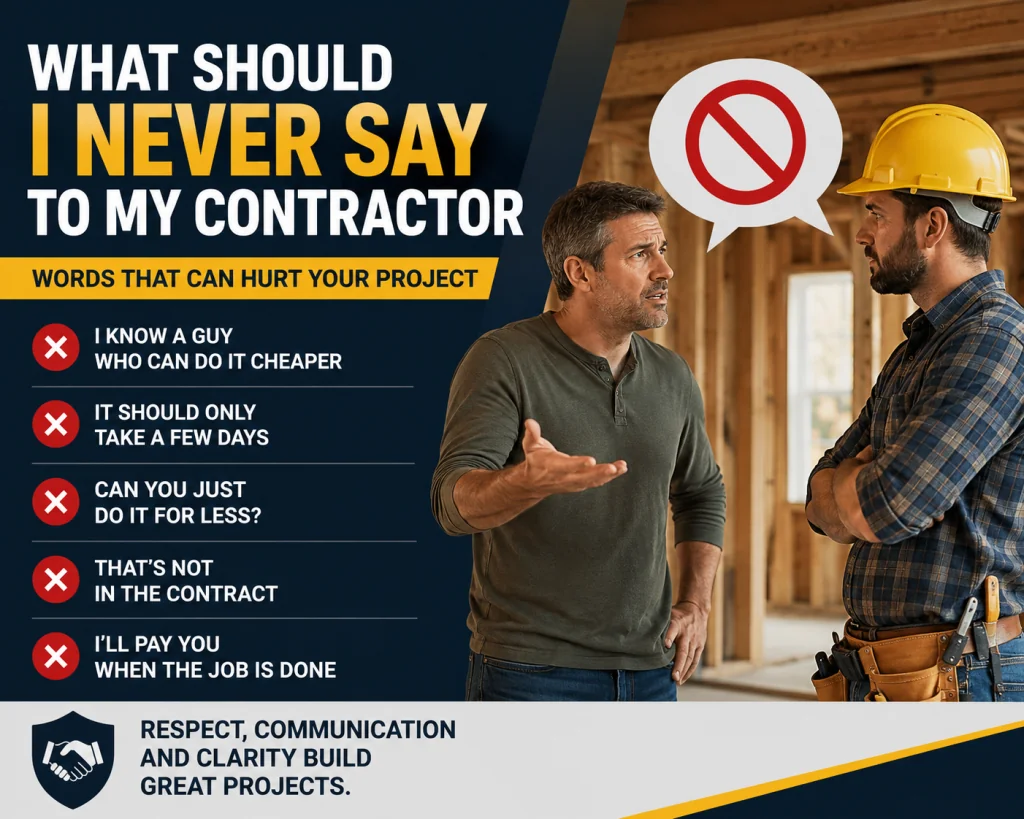
What Should I Never Say to My Contractor?